Case file 26
The line the client nearly left out
Name withheld
- Came in with
- Porn
- Program
- 90-Day Behavior Control System, with a specialist
- Where it stood at last contact
- Staying away from porn and still improving, with physical improvements compared with a few months earlier
- On record
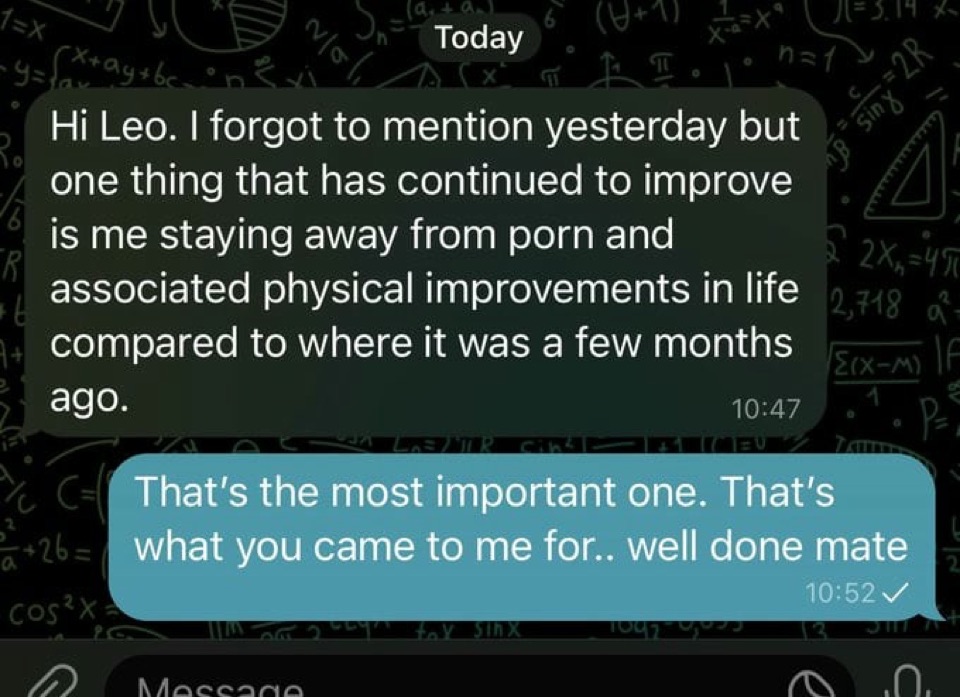
- Written update (screenshot): one message, sent the day after a fuller update
The most important part of this client's update came as an afterthought. They'd sent their specialist a progress update the day before. The next morning they wrote again, because they'd forgotten one thing: they were still staying away from porn, it was still getting easier, and their body felt better than it had a few months before.
Porn was the habit the client came to us with. By the time of this message, it had become something they could forget to mention. This file is shorter than most because the record is a single message. It follows what that message shows: a steady change that kept going, and a client who stayed in regular contact the whole time.
A habit that was wearing the client down
The client measures their progress against "where it was a few months ago", and they talk about "physical improvements". So a few months before, things were worse, and the habit was part of why their body felt the way it did.
That fits a common pattern. A porn habit takes late nights, broken sleep and a lot of attention. It can leave a person flat, tired and less interested in their body and the people around them. We don't know which of these hit this client hardest. What we do know is that when the habit eased, the client noticed physical changes and connected them to it.
Earlier attempts aren't part of the record.
What we found, and the plan we set
The first call looked at what kept the habit in place. For this client, the habit was tied to the end of the day: being tired, being alone, and having a screen within reach. The plan followed the program's usual order. First the body and the day would be steadied. Then the habit would stop on Day 15. Then the client would build responses for the moments that were still risky. From the start, the client agreed to keep their specialist updated, and they did.
Phase 1, Days 1 to 30: the body first
For this client, the part of the first month that showed most was the body. The nightly entries to their specialist began on Day 1, and the first thing they tracked was sleep, which moved onto fixed times, with the phone kept away from the bed. Walks and training went in during the first week, and eating changed in the second. The rest went in more quietly: a short daily practice for attention, a planned shape to each day, a written list of every easy reward they leaned on, and an honest history of the porn habit.
The physical changes started here. They were small at first. Sleep came more easily, mornings were less of a struggle, and the client had more energy for training. It came a little at a time, and the client's word "continued" tells us it kept building after that.
Abstinence started on Day 15. The first weeks were hardest late in the evening, and the client leaned on the routine to get through them. Cold and heat, a hobby, a calming practice and lessons on cravings and memory filled out the month, and the Day 28 call reviewed it.
Phase 2, Days 31 to 60: a plan for the end of each day
On Day 31 the client mapped their triggers. Most were late in the day: tiredness, the bed, being alone with a phone, boredom and a low mood. On Day 32 they cleared what they could, and screens were set up so porn was hard to get to.
Each trigger that was still there got its own response. They listed the thoughts that gave them permission and answered the main one in writing. Practices for breathing, body tension and the height of a craving came next.
A Sunday with nothing wrong. The real test of this phase wasn't a hard night. It was an easy Sunday afternoon. They'd slept well, trained in the morning and had nothing to do. Nothing was wrong at all, and that was the problem. Boredom was on their map, but they'd always pictured it on a tired evening, and the boredom of a long, comfortable afternoon crept up without feeling like a risk. By mid-afternoon they noticed they were lying on the bed with the phone, which was the old setting exactly.
They got up, went out, and the afternoon passed. It was over before they thought of messaging anyone. They mentioned it in passing in their next weekly update, almost as an aside, and their specialist added a response for easy, empty afternoons to their set. Their full set of responses was in place by Day 52, and the phase ended with a week of using it and the second progress call.
Phase 3, Days 61 to 90: a person who doesn't need it
The last phase dealt with how the client saw themselves. They looked back at past attempts and why they hadn't held. They started to see themselves through their daily actions, chose a goal that mattered to them, and rehearsed the hardest moments ahead of time. The phase ended with a look back at the Day 1 account and a plan for what came after.
Where the client was at last contact
The client's message, in full apart from the greeting:
"I forgot to mention yesterday but one thing that has continued to improve is me staying away from porn and associated physical improvements in life compared to where it was a few months ago."
Two things in that sentence matter. The first is "continued to improve". The change hadn't leveled off. It was still getting better. The second is "I forgot to mention". The client had sent a full update the day before, and the habit they came to us for wasn't the first thing on their mind. A habit that used to take up a lot of their attention had become something they could leave out of an update by accident.
The message doesn't say where in the program it was sent, or whether it came after the 90 days. If it came before the end, the last part of the program described above came after it.
What kept it improving
- The body came first, and the changes were physical. The client's own measure of progress includes physical improvements, and the first phase was built to produce them before the habit stopped.
- Regular contact. The client was updating their specialist often enough to send a correction the next morning. Their specialist always had a recent picture of how things were going.
- Steady improvement. The client describes a change that "continued". It built gradually, and they could see it building.
For anyone measuring progress month by month
If you're trying to stop porn, this case is a reminder of what progress often looks like from the inside. It's usually gradual, and you notice it when you compare where you are now with where you were a few months ago.
It's also a reminder that the physical side counts, and that the risky moments aren't always bad ones. Alongside staying away from porn, this client reported that their body felt better for it.