Ten months out of alcohol and drugs
A client who came to us with alcohol and drugs messaged, unprompted, to mark ten months out: long after the 90 days had ended.
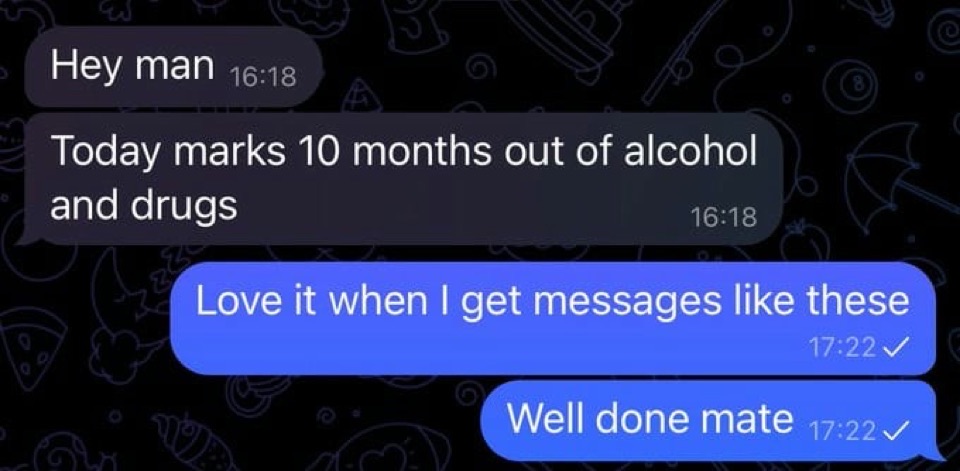
A client came to us with alcohol and drugs. One afternoon, out of nowhere, they sent us this: "Hey man. Today marks 10 months out of alcohol and drugs."
That's long after our 90 days together had ended. This is how we did it.
Ten months matters because of when most people start again.
If you've stopped drinking or using before, you probably know how it goes. The first few weeks are hard, but you're paying attention: you count the days, you stay away from the bar, and the people around you know you're trying.
Then you get to 30 days, or 60, or 90. You feel better and you sleep better, and you start to think it's handled.
And somewhere in the months after that, you have one. It usually isn't during a crisis. It's an ordinary evening, when you'd stopped expecting the craving at all.
The reason is that the habit is still in your brain. You're using the old pathway less, and as long as you keep doing the new thing, the new thing wins, but the old one doesn't disappear.
Most plans to stop are built for the first few weeks, to get you through the worst cravings. Once the cravings ease, the plan ends, and so does the attention. But the triggers are still in your life, like the friends you drank with, Friday night, stress at work or a piece of bad news. And now nobody, including you, is watching for them.
That's why a lot of people relapse months in, after they've already done the hardest part.
We build the program in three phases, in that order, for exactly this reason.
Phase 1 rebuilds the day around sleep, training, food and a routine with fixed points. The habit lived in tired, empty days, and it's very hard to hold on to anything in a day like that.
Phase 2 maps every trigger and builds a response for each one, and you practice each response until it's automatic. That covers the cravings in the first weeks, and it also covers the situations that come round months later, like a wedding, a bad week at work or a holiday.
Phase 3 is the part that makes ten months possible. We work on who you are without the habit, and on a plan for the times you're most likely to fall after the 90 days are over. The goal is that you don't need us anymore.
Here's the message.
"Hey man"
"Today marks 10 months out of alcohol and drugs"
Look at when it came. Nobody had asked. It came months after the program, on an ordinary afternoon, from someone who was still counting the days because they still mattered.
We wrote back: "Love it when I get messages like these. Well done mate."
If you've stopped before and made it to a few weeks or a few months, you don't need another way to get through the first week, because you've already done that. What you need is a plan for month four, month seven and month ten, the months when you've stopped expecting the craving.
And if you drink heavily every day, talk to a doctor before you stop. Stopping suddenly can be dangerous.
The Behavior Control System
Our 90-day program, private and one-on-one, built around your life.
See our programsField Notes
One letter a week from the lab.