

What we've learned about how habits work, and how they break.
Seven years of writing on behavior control, from the mechanism to the moment a craving hits. Each piece started as something our founder wrote for the more than 100,000 people who follow the work on X.


The Masterclass Series
18 in-depth methods, each one taught step by step, in the order we published them.
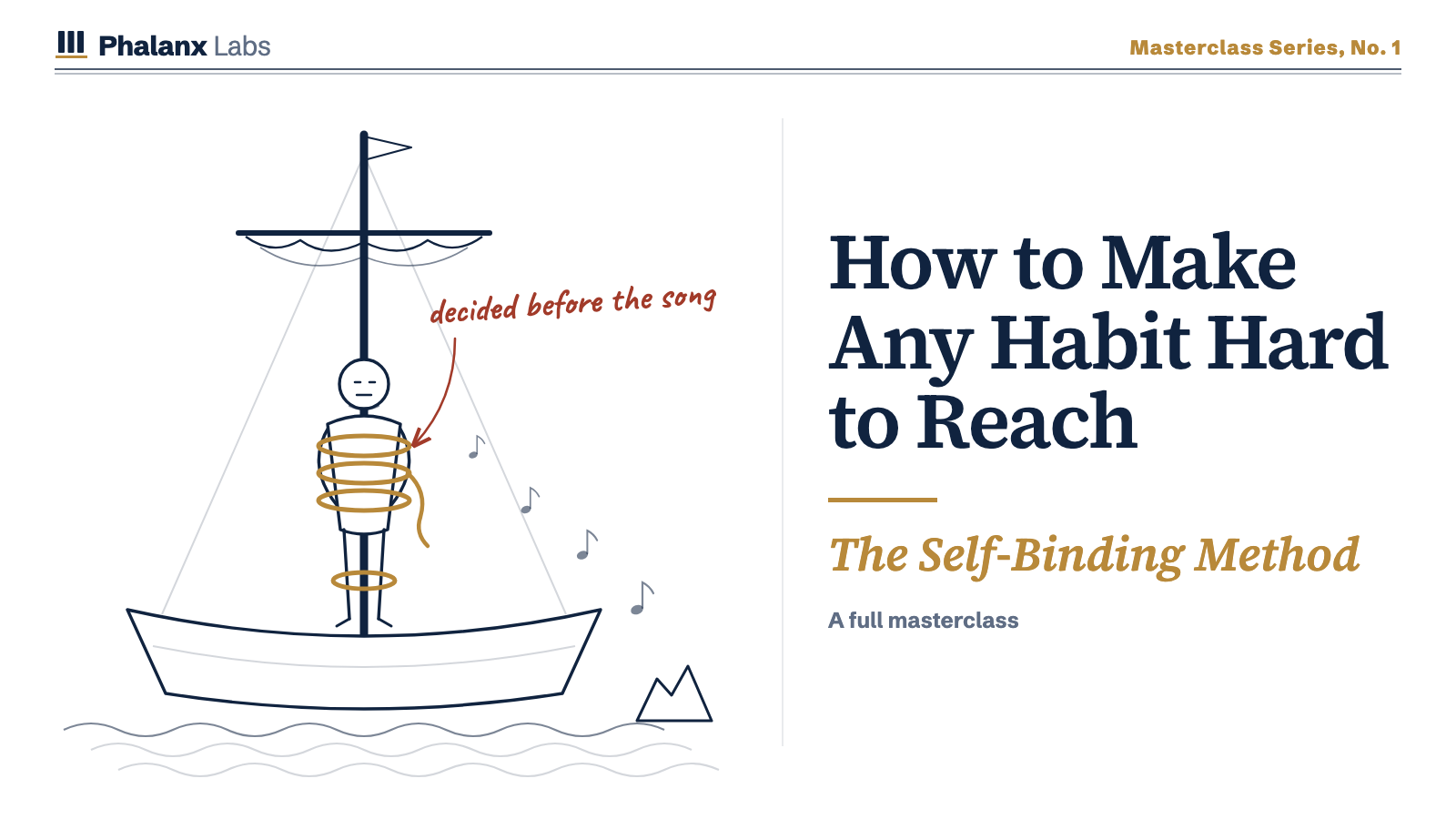
How to make any habit hard to reach
8 min read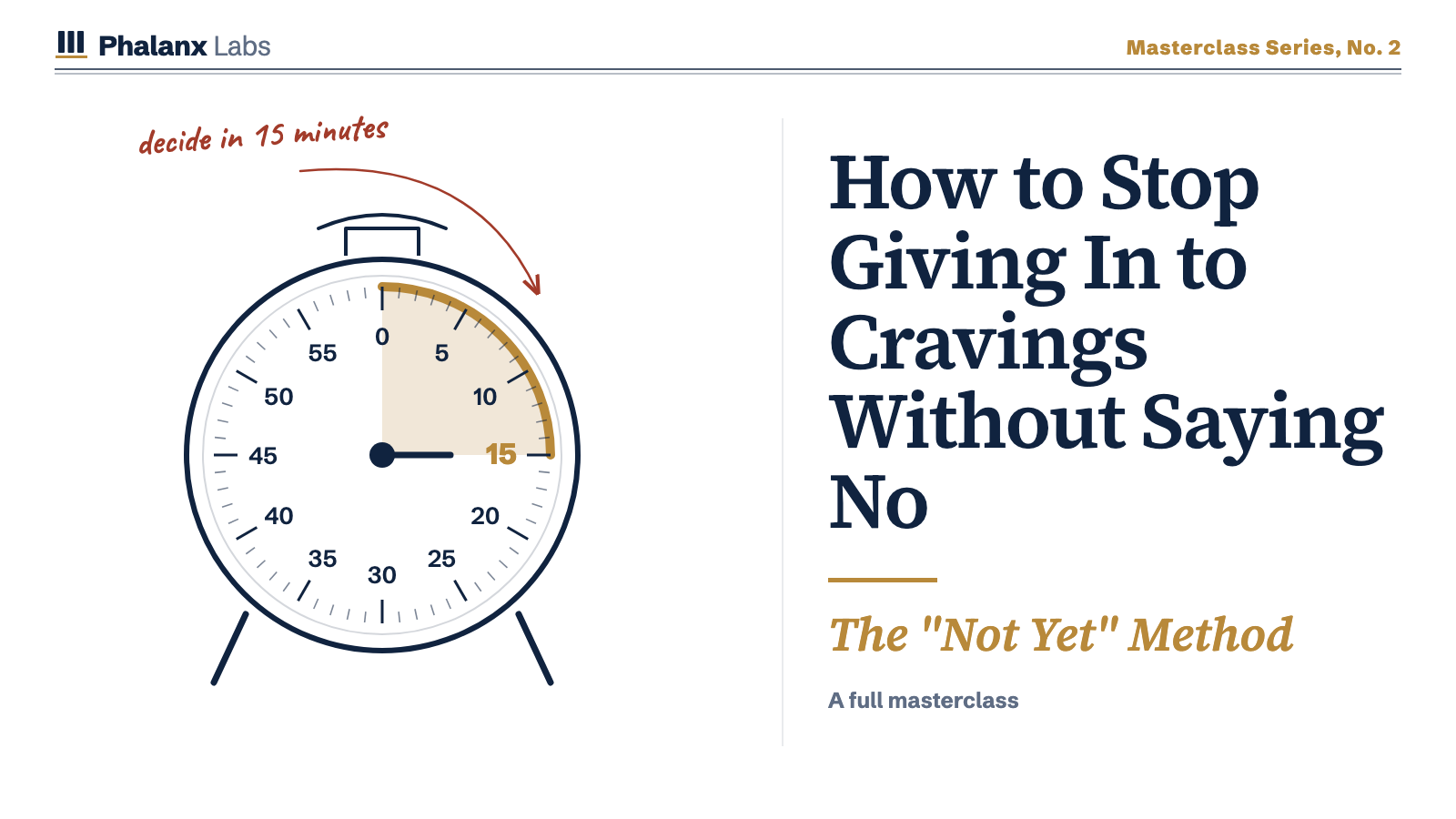
How to stop giving in to cravings without saying no
9 min read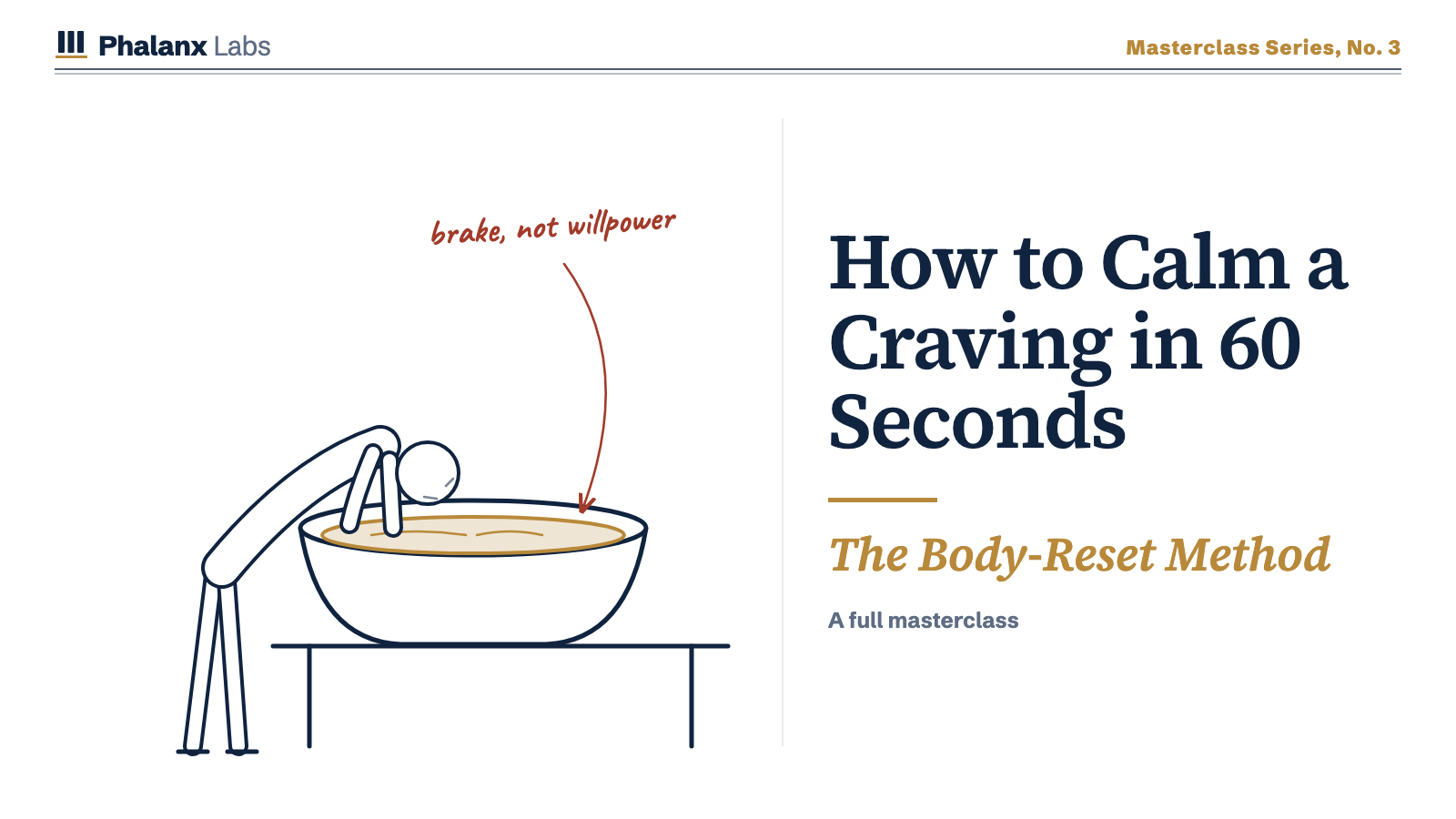
How to calm a craving in 60 seconds
8 min read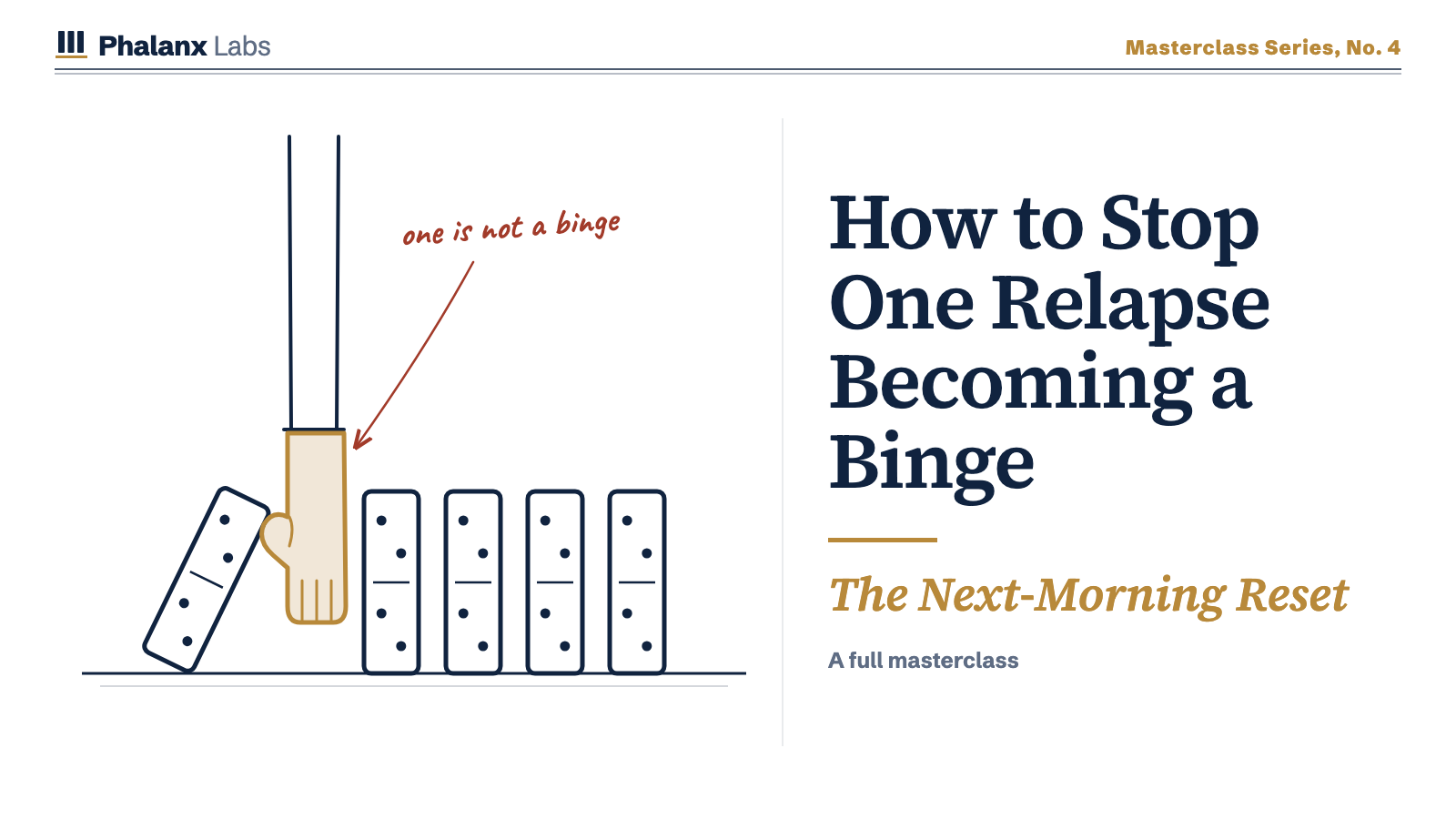
How to stop one relapse turning into a binge
9 min read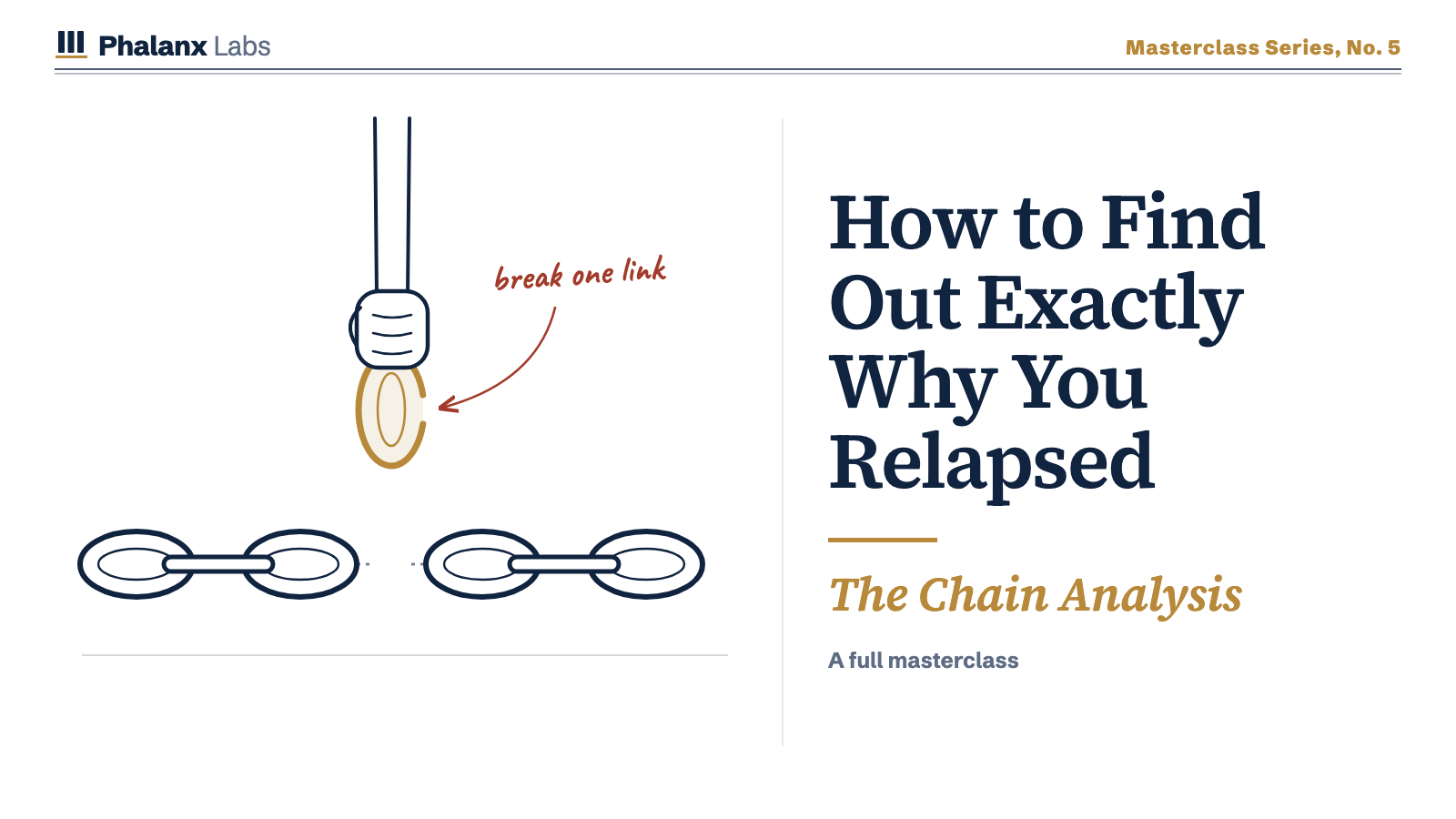
How to find out exactly why you relapsed
10 min read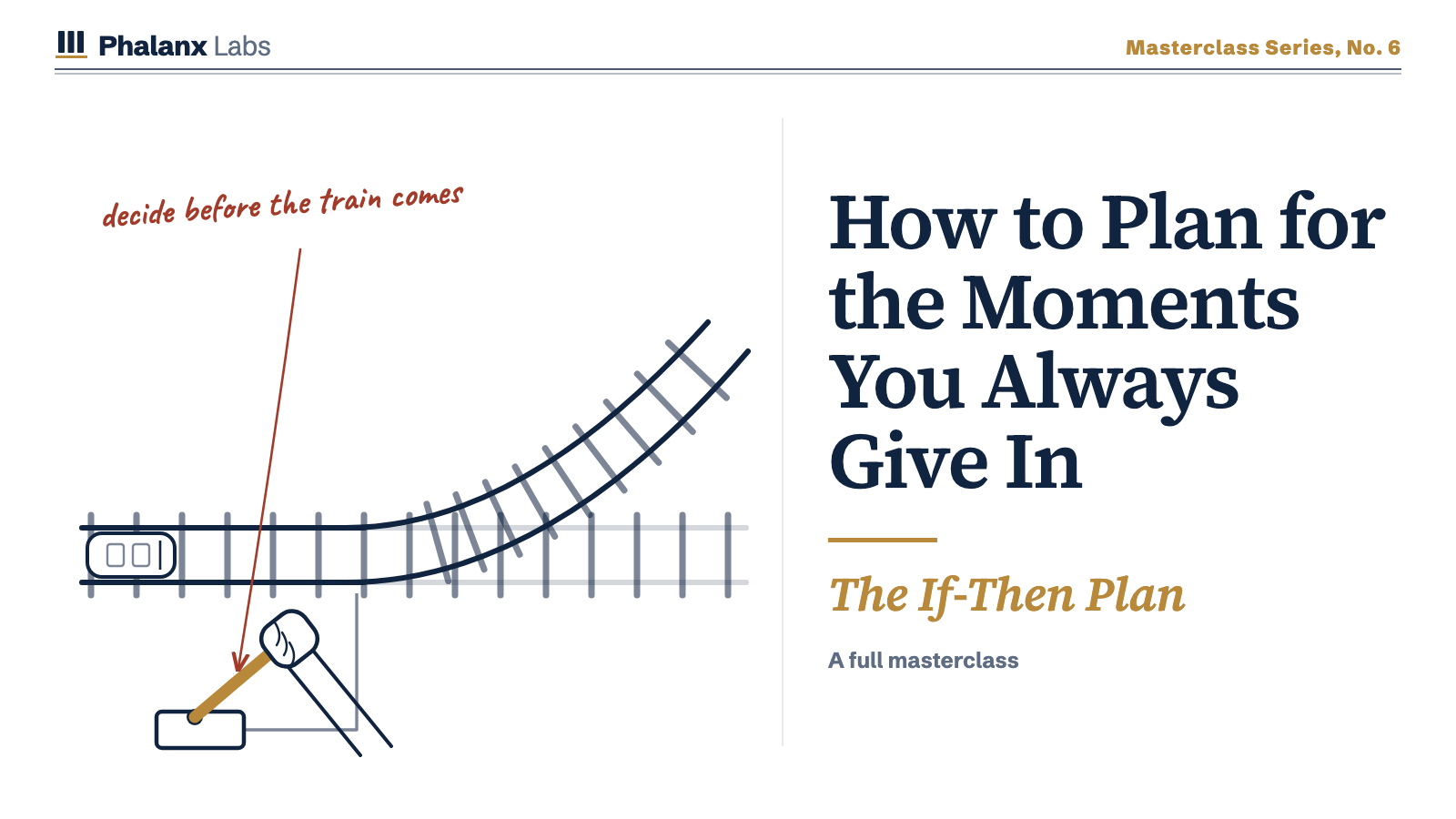
How to plan for the moments you always give in
9 min read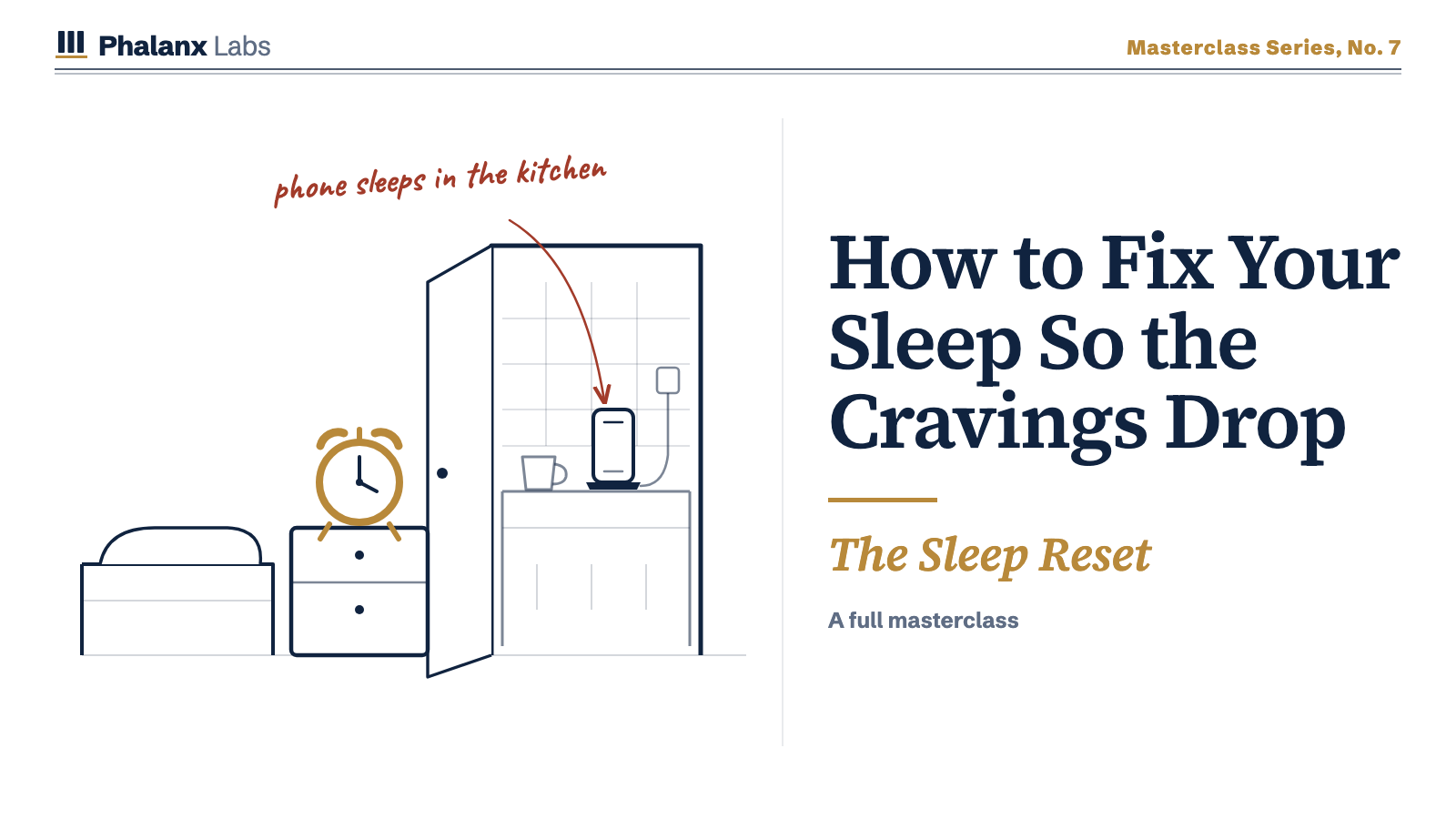
How to fix your sleep so the cravings drop
7 min read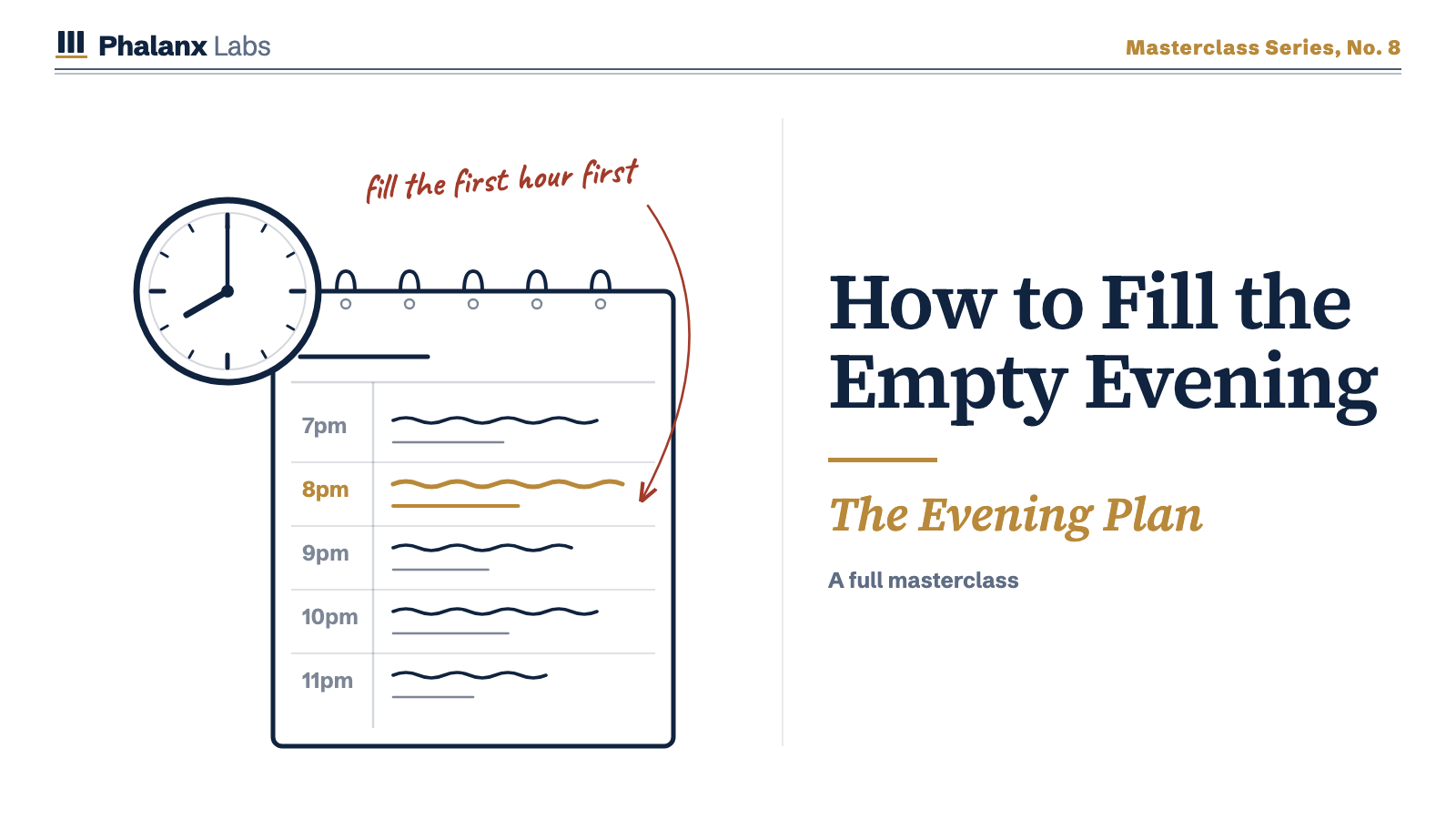
How to fill the empty evening
8 min read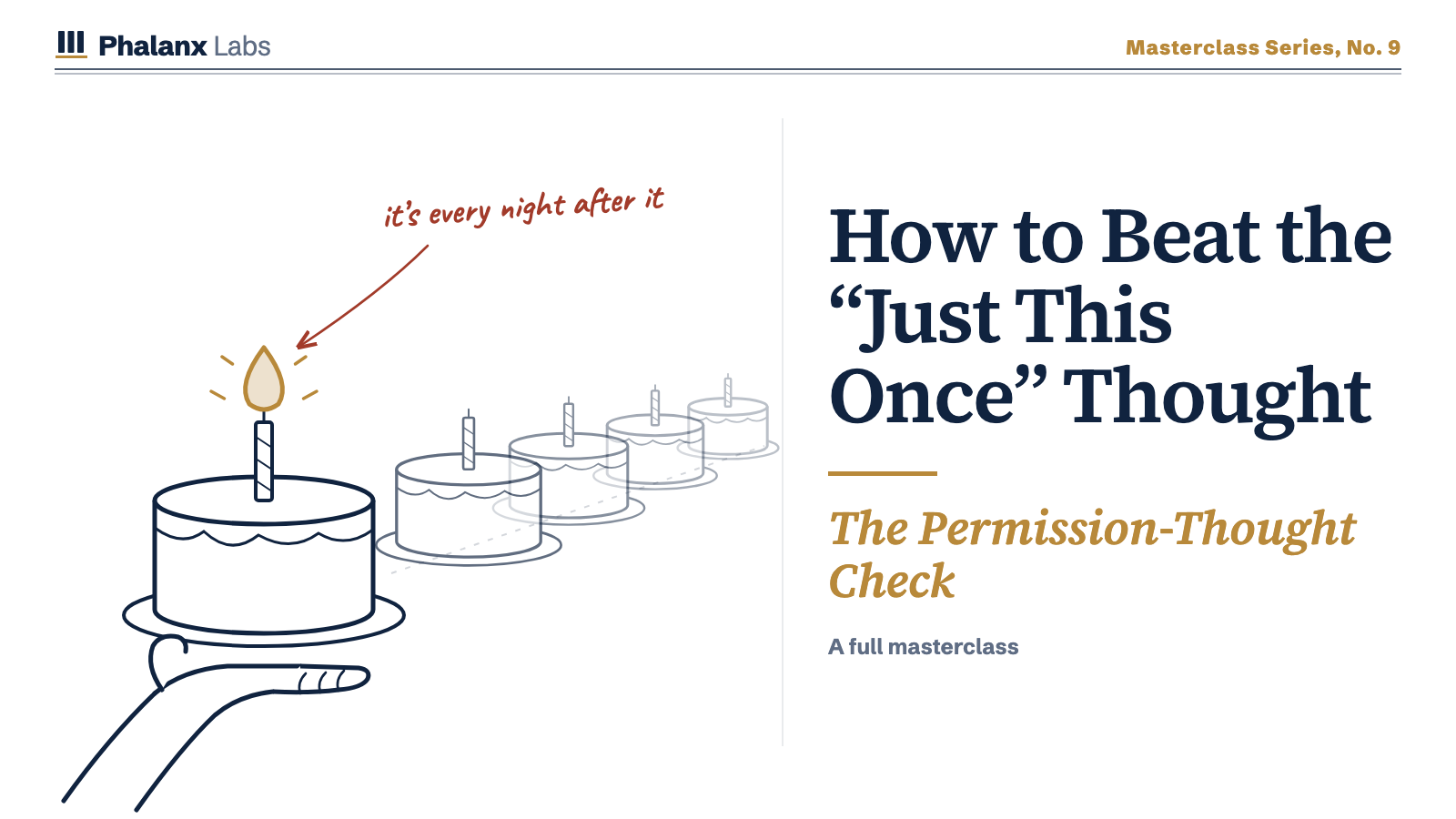
How to beat the “just this once” thought
9 min read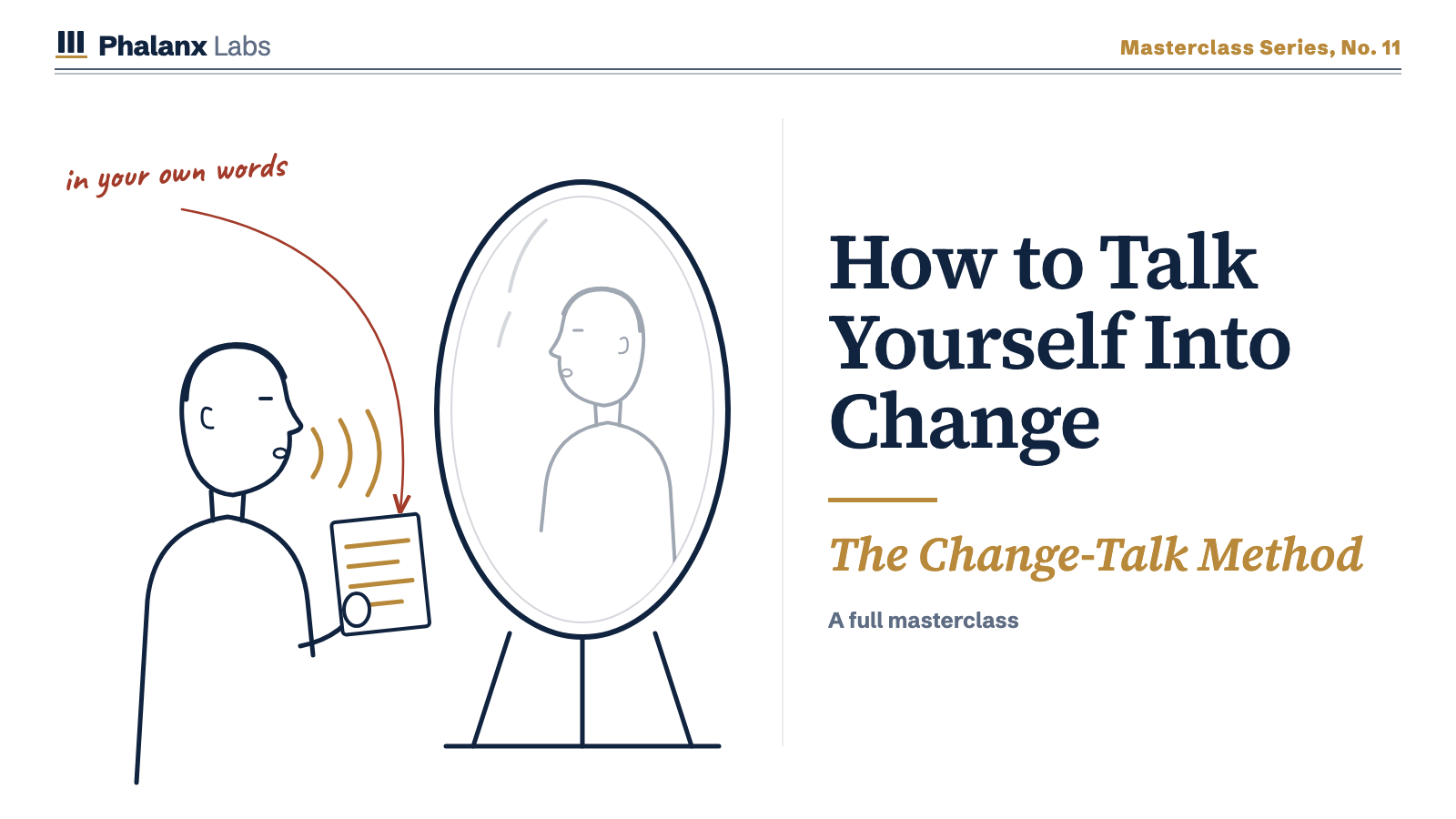
How to talk yourself into change
7 min read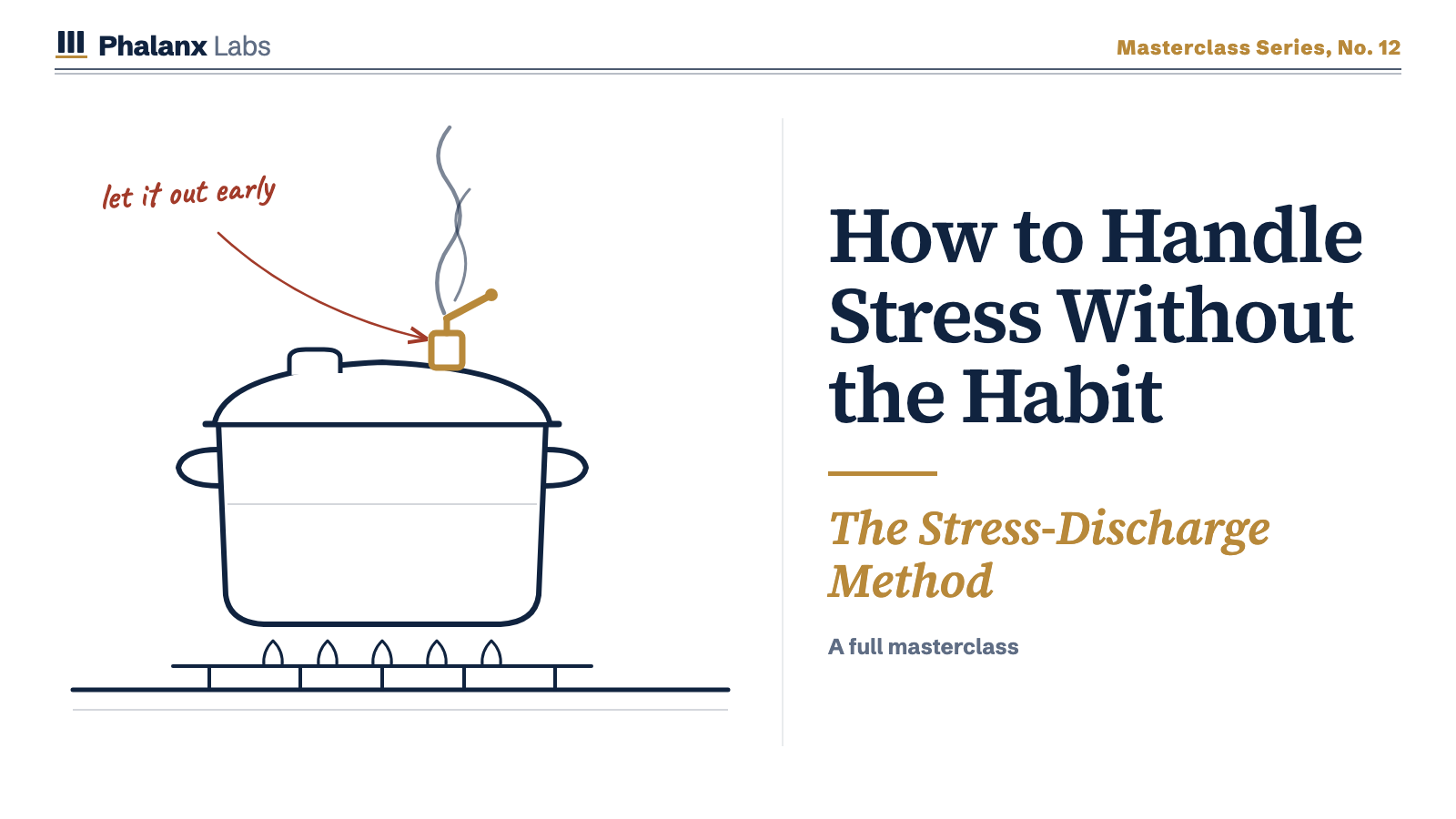
How to handle stress without the habit
9 min read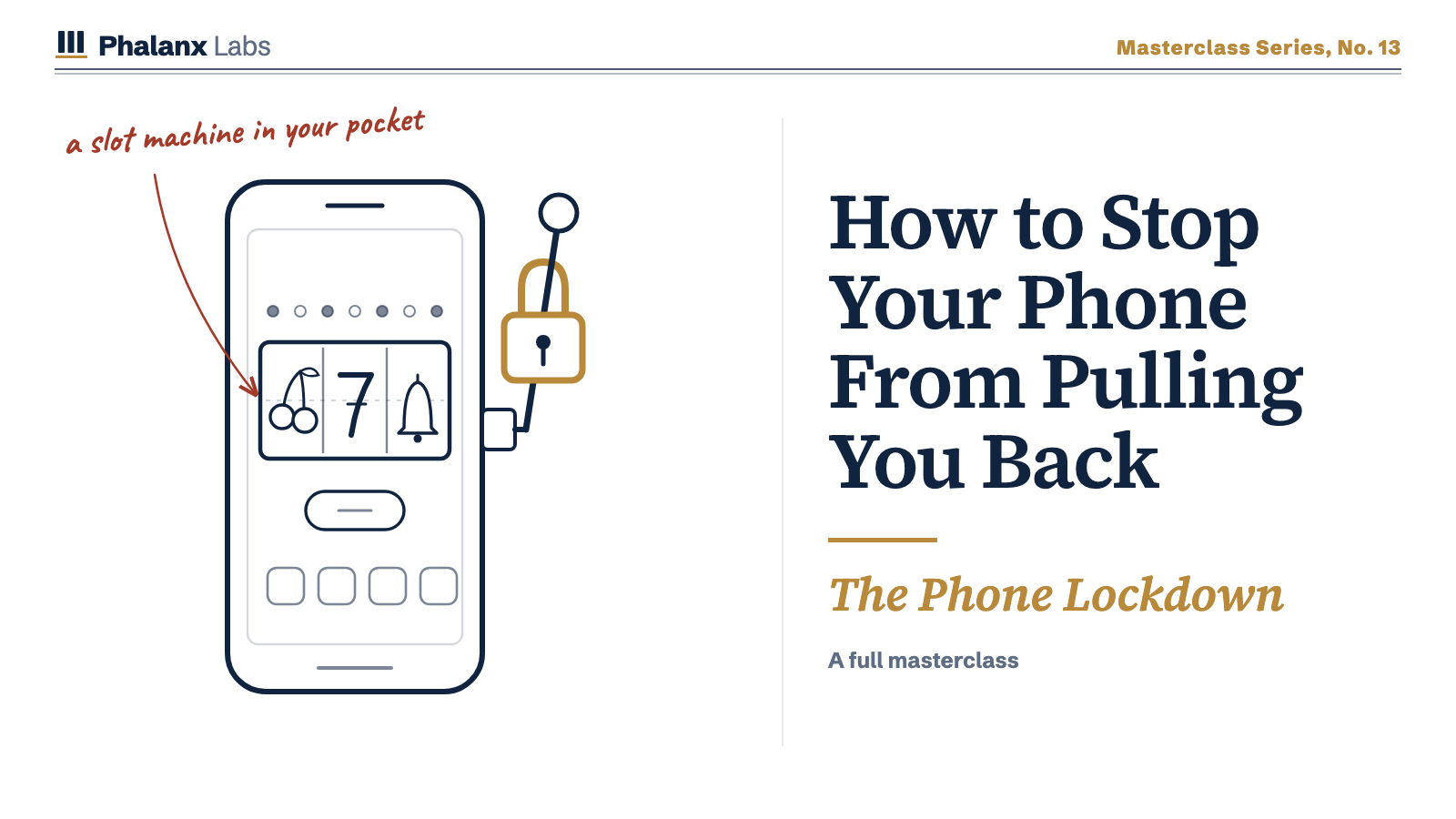
How to stop your phone from pulling you back
9 min read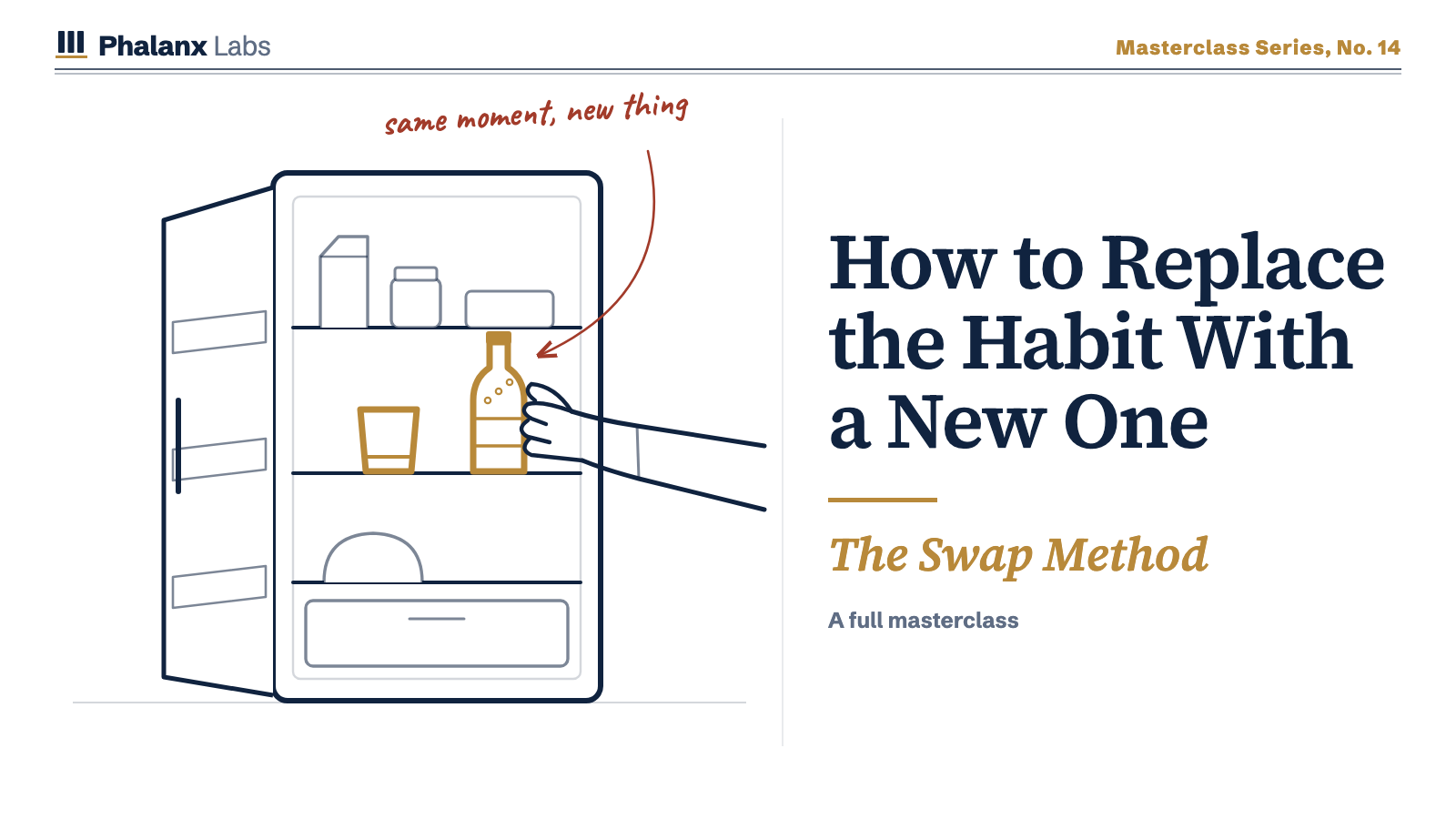
How to replace the habit with a new one
9 min read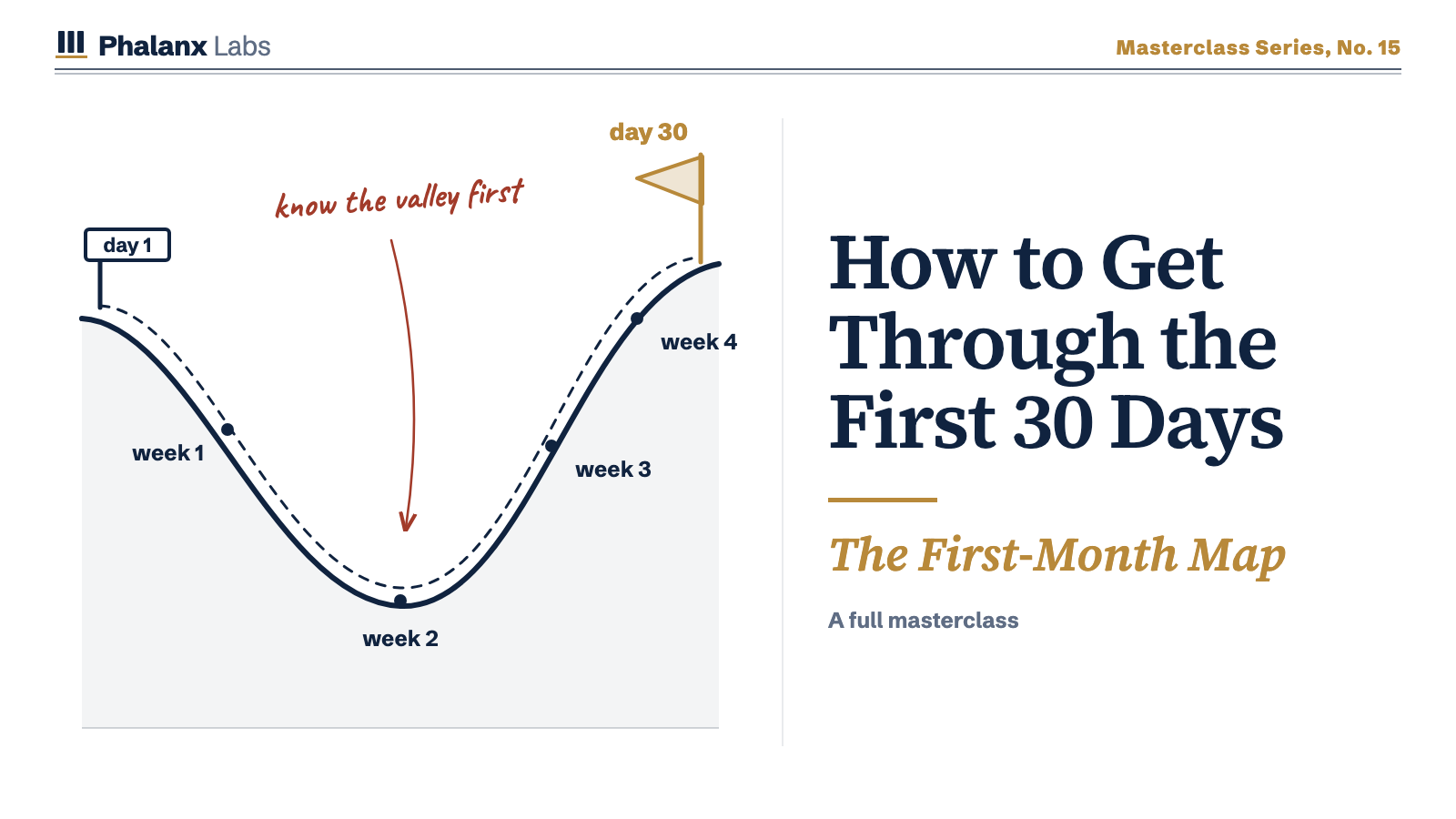
How to get through the first 30 days
8 min read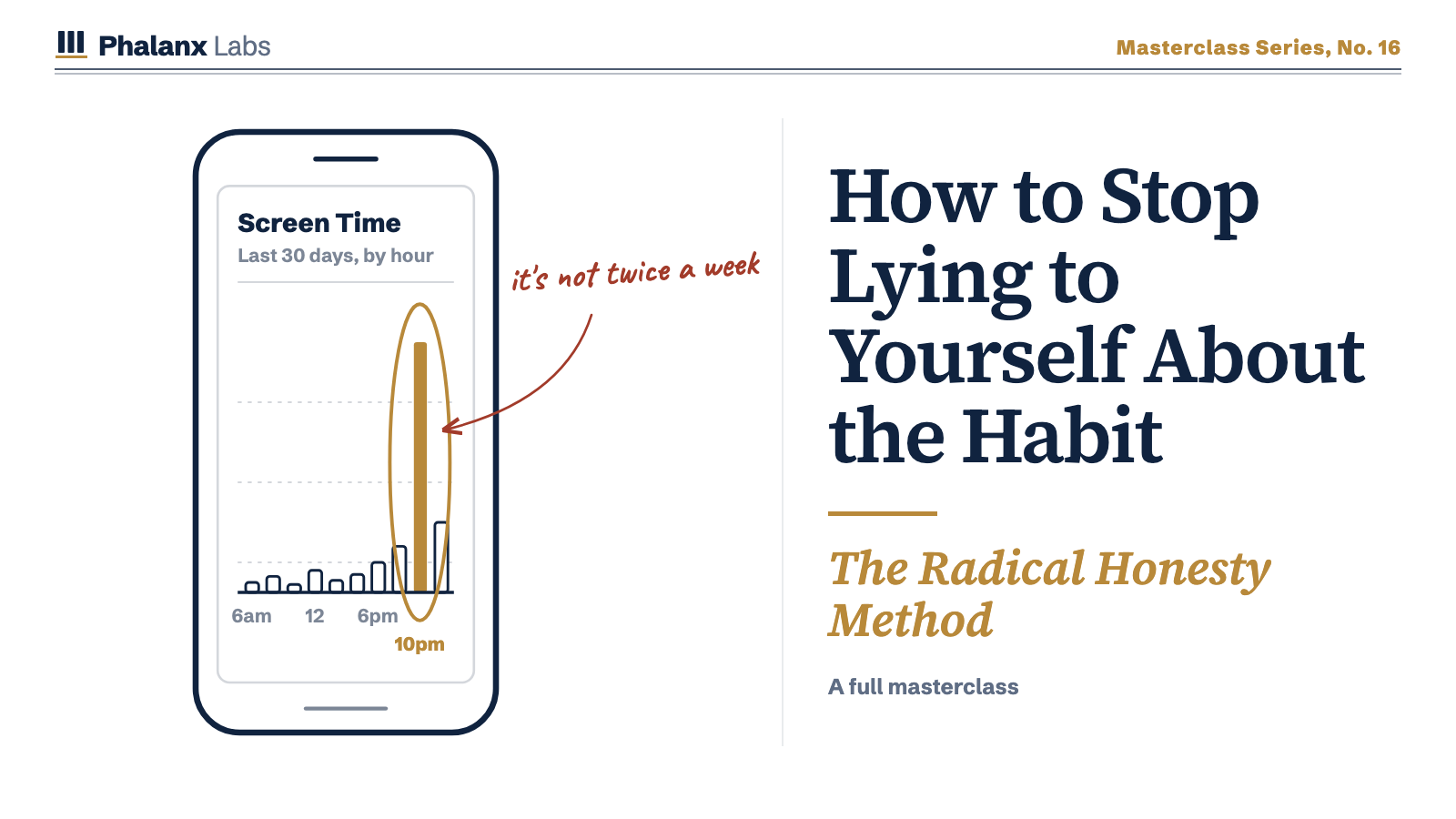
How to stop lying to yourself about the habit
9 min read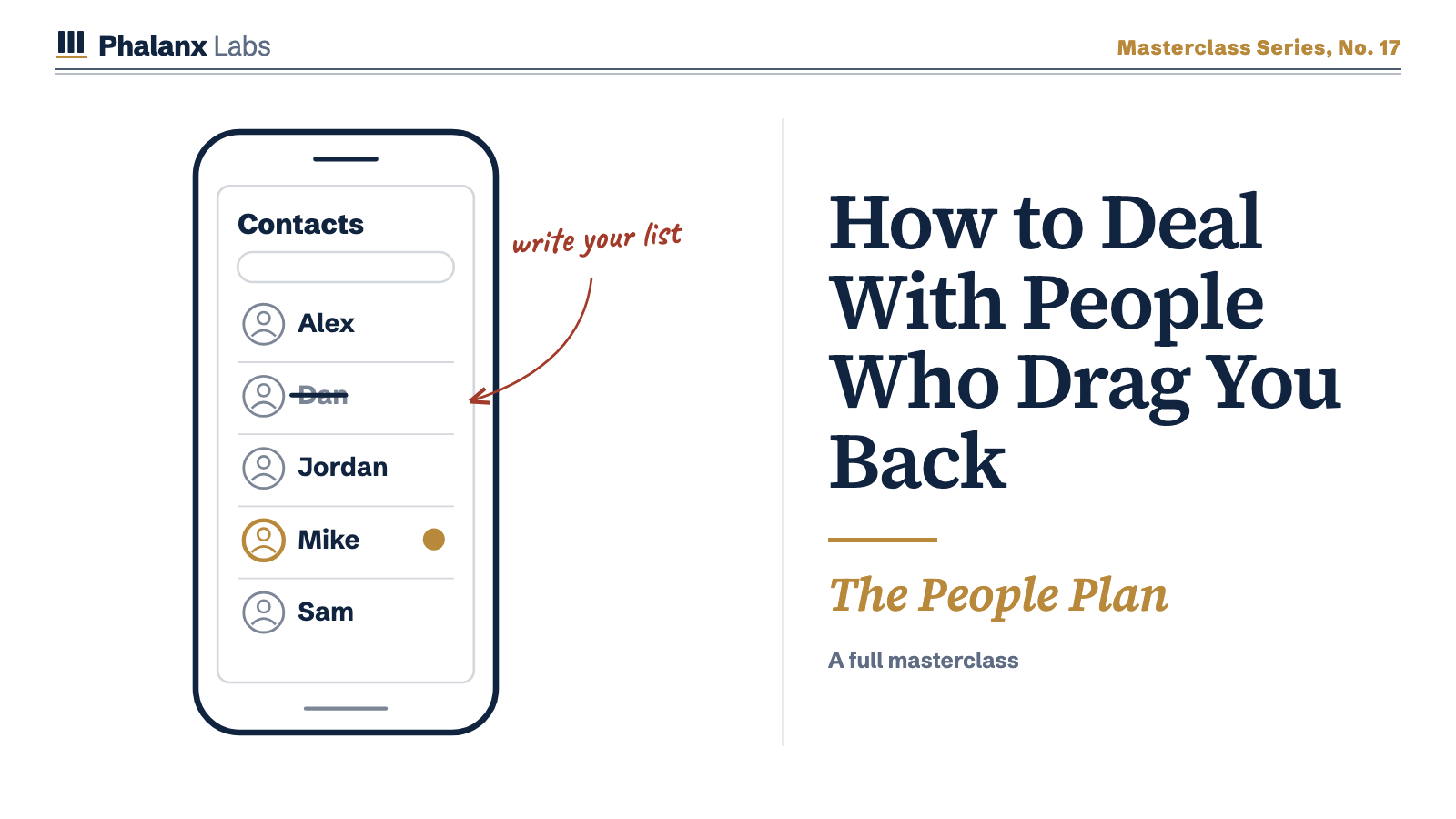
How to deal with people who drag you back into the habit
9 min read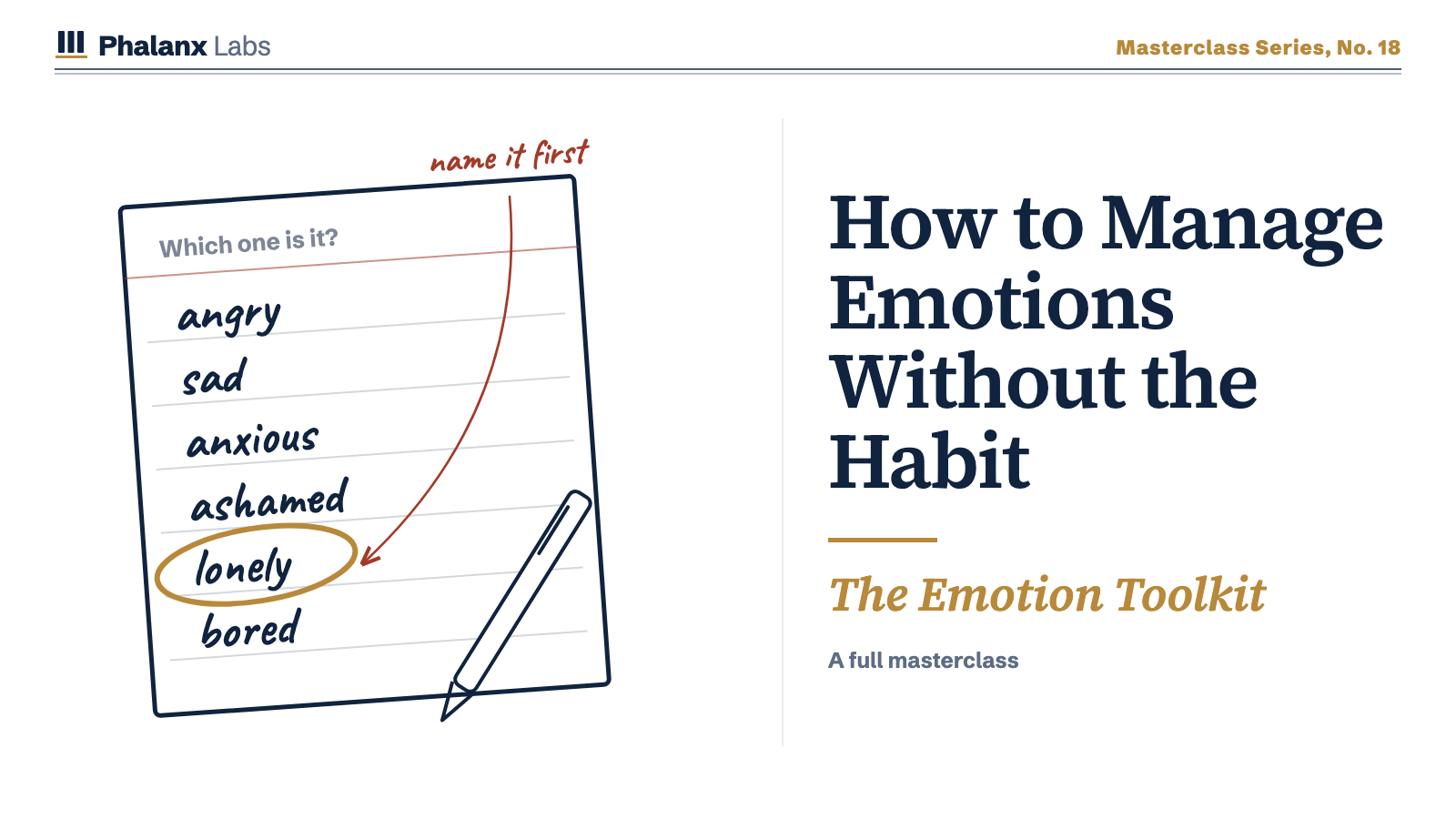
How to manage your emotions without the habit
8 min read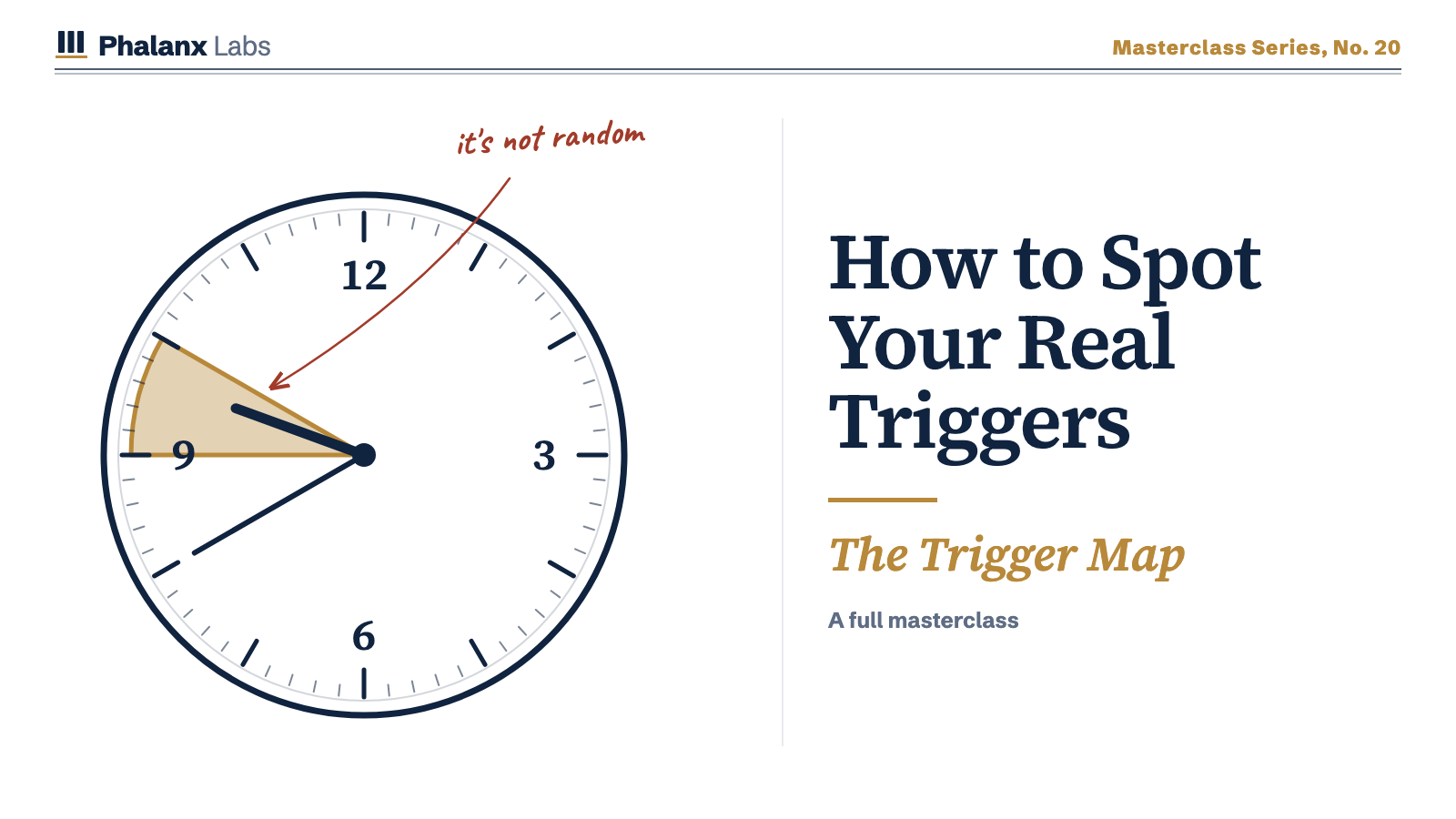
How to spot your real triggers
6 min read


Everything we've published
72 articles, newest first
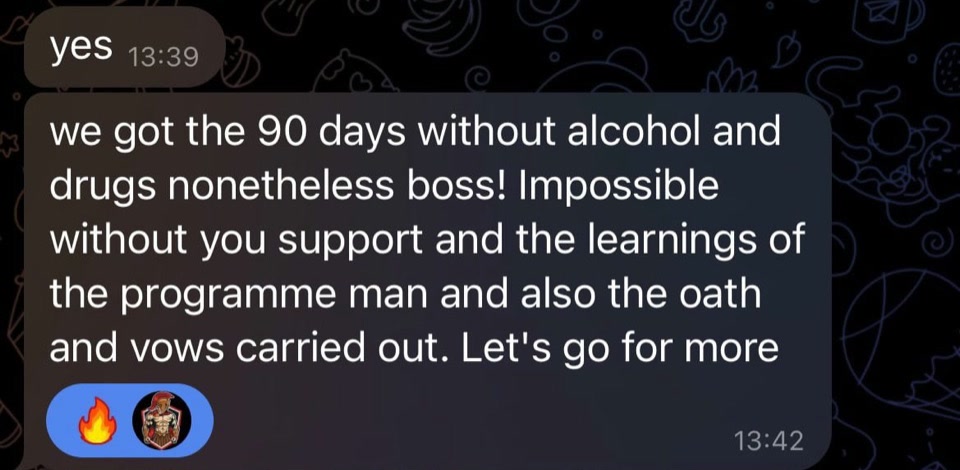
90 days without alcohol and drugs, and the oath that helped
A client came to us with alcohol and drugs, and at the 90-day mark they said it was impossible without our support, what they learned and the oath and vows.3 min readHow to spot your real triggers
If someone asks what your trigger is, you'll probably say “stress” or “being bored”, and you can't plan for either of them.6 min read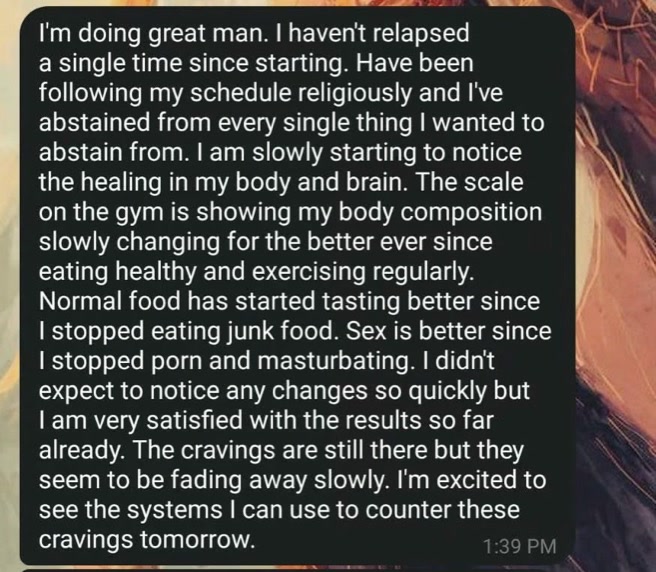
A client stopped porn and junk food by fixing the day first
A client came to us trying to stop porn and junk food, and before we had even started on the cravings, they hadn't relapsed a single time.3 min readHow to manage your emotions without the habit
For a lot of people, the habit has become the way they act on a bad feeling, and acting on the urge is what keeps the feeling going.8 min read
Pshem came for procrastination and left with a system
Pshem came to us with a severe procrastination problem, his days going to video games and scrolling; three months later, he said his mental clarity was on point and he didn't crave bad habits at all.3 min read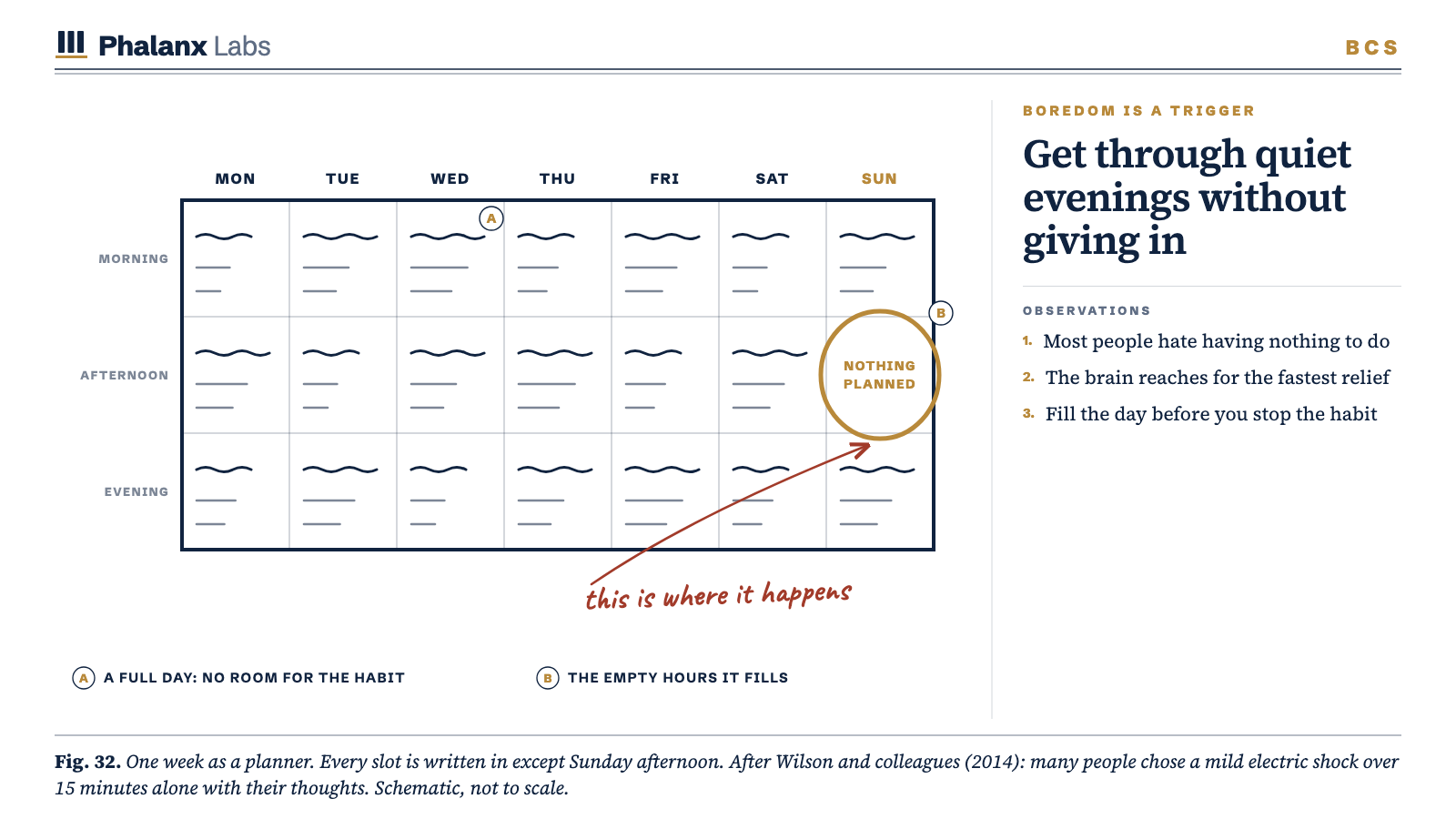
Get through quiet evenings without giving in
A lot of people who are trying to break a habit don't relapse on their worst day: they relapse on a quiet afternoon when there's nothing to do.4 min readHow to deal with people who drag you back into the habit
Giving in around certain people is not a weakness of will: it's what happens when you walk into the hardest situation of your week and try to work out what to say and how to leave while it's happening.9 min read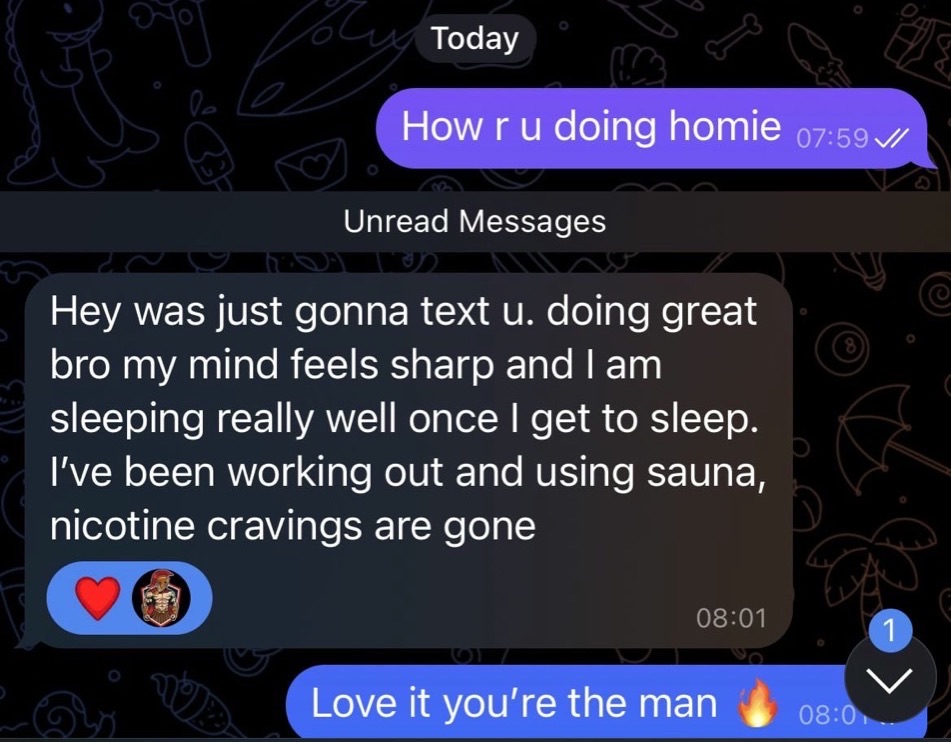
A client got off nicotine by fixing the day first
A client trying to get off nicotine wrote to us that their mind felt sharp, they were sleeping well, training and using the sauna, and the nicotine cravings were gone.3 min readHow to stop lying to yourself about the habit
Lying to yourself about the habit is not a weakness of character: it's what almost everyone does when part of them wants to stop and part of them doesn't.9 min read
Ade needed someone outside his own pattern
Ade had spent years trying to break his bad habits on his own; two and a half months into working with us, he said it was the best he had felt, physically and mentally, as far back as he could remember.3 min read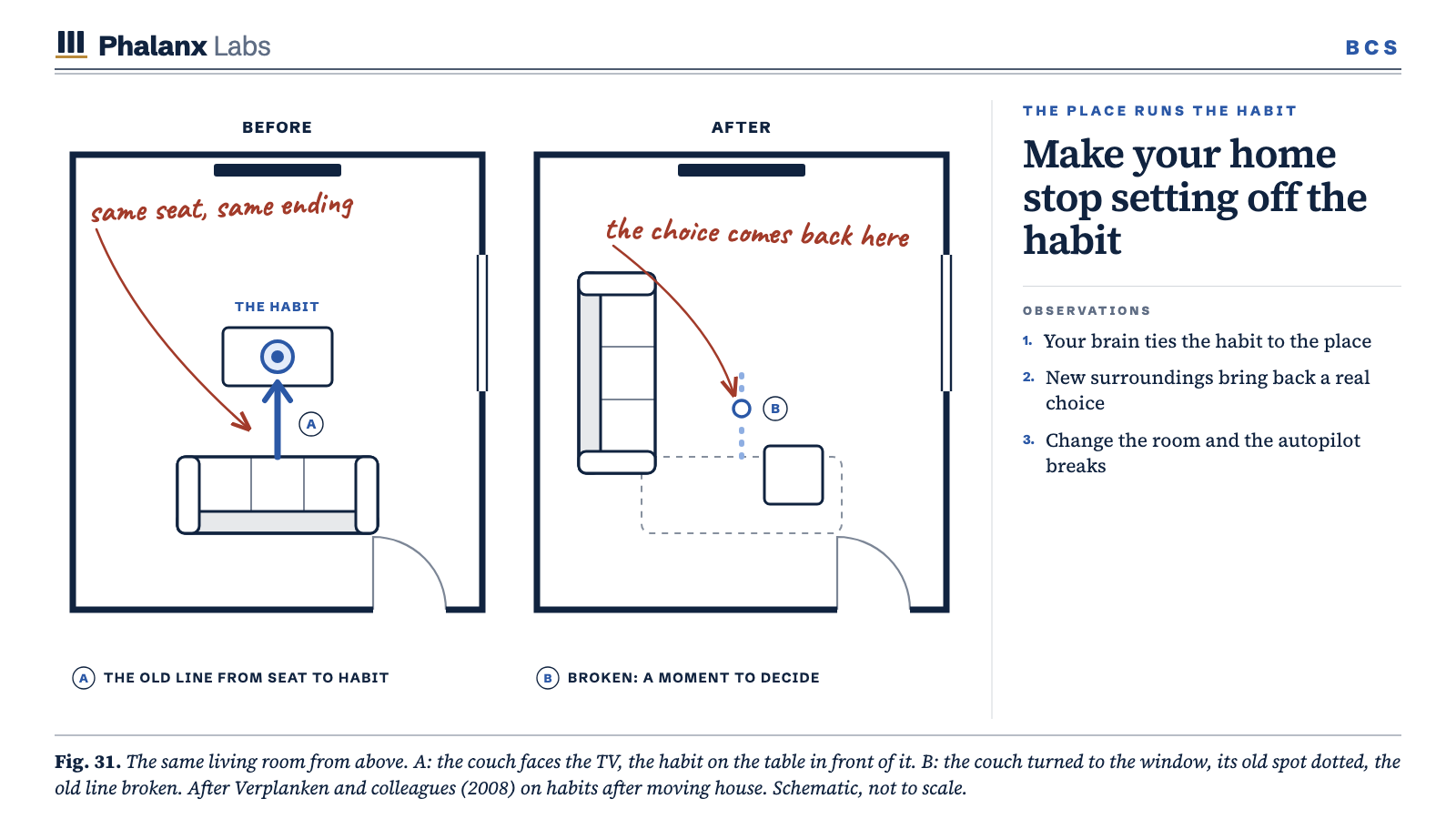
Make your home stop setting off the habit
Most people trying to break a habit try to change themselves and leave their room exactly as it was, and that's a big part of why the habit keeps winning.4 min readHow to get through the first 30 days
Falling apart in the first month is not a weakness of will: it's what happens when you walk into the hardest month without knowing what it looks like.8 min read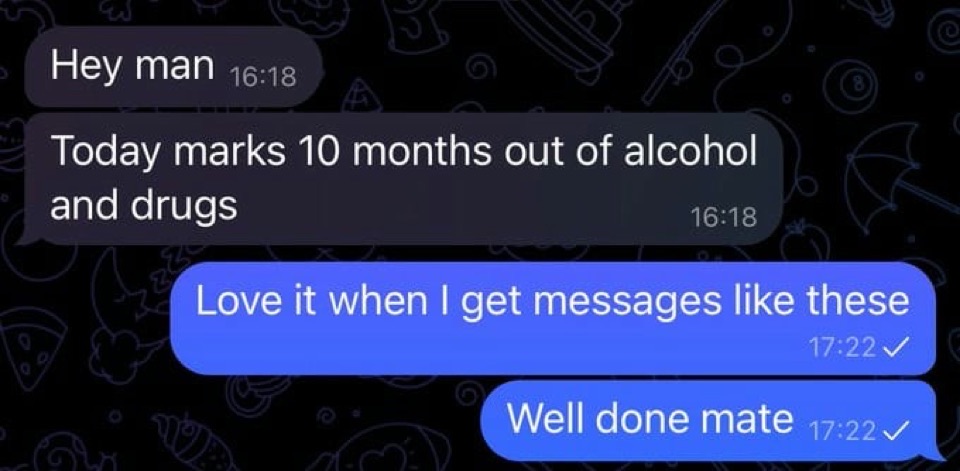
Ten months out of alcohol and drugs
A client who came to us with alcohol and drugs messaged, unprompted, to mark ten months out: long after the 90 days had ended.3 min readHow to replace the habit with a new one
Going back to the habit after you take it away is not a weakness of will: it's what happens when you take a habit out of your day and leave nothing in its place.9 min read
Waqas came off Adderall with a plan, not a date
Waqas was using Adderall two or three times a week; instead of picking a date and stopping cold, he tapered off with a plan and was 31 or 32 days without it.3 min readWhy one relapse feels like it wiped out your whole life
When the only thing you're working on is quitting a habit, one relapse can feel like it wiped out your whole life, and there's a real reason it feels that way.4 min readHow to stop your phone from pulling you back
Losing hours to your phone isn't a weakness of will: you're carrying a machine that works exactly like a slot machine, so you take it apart one piece at a time.9 min read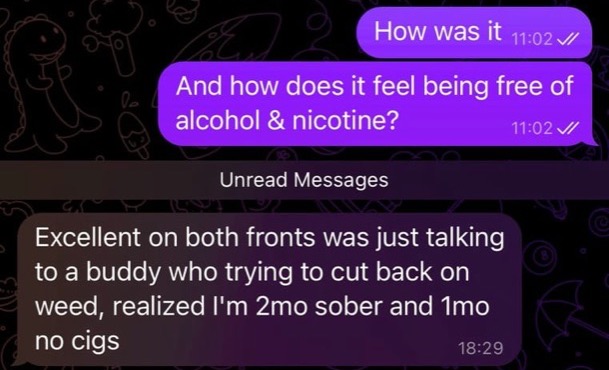
Two months sober and one month off cigarettes
A client came to us drinking and chain-smoking every day; a couple of months in, he was two months sober and a month without cigarettes.3 min readHow to handle stress without the habit
A stressful day often ends in a relapse at night, so you give the stress somewhere else to go, earlier in the day, before it reaches the evening.9 min read
Bjorn: 71 days sober, and easier than any attempt before
Bjorn came to us because he had lost his motivation and his joy in life; two and a half months later he was 71 days sober, and it had been easier than any attempt before.3 min read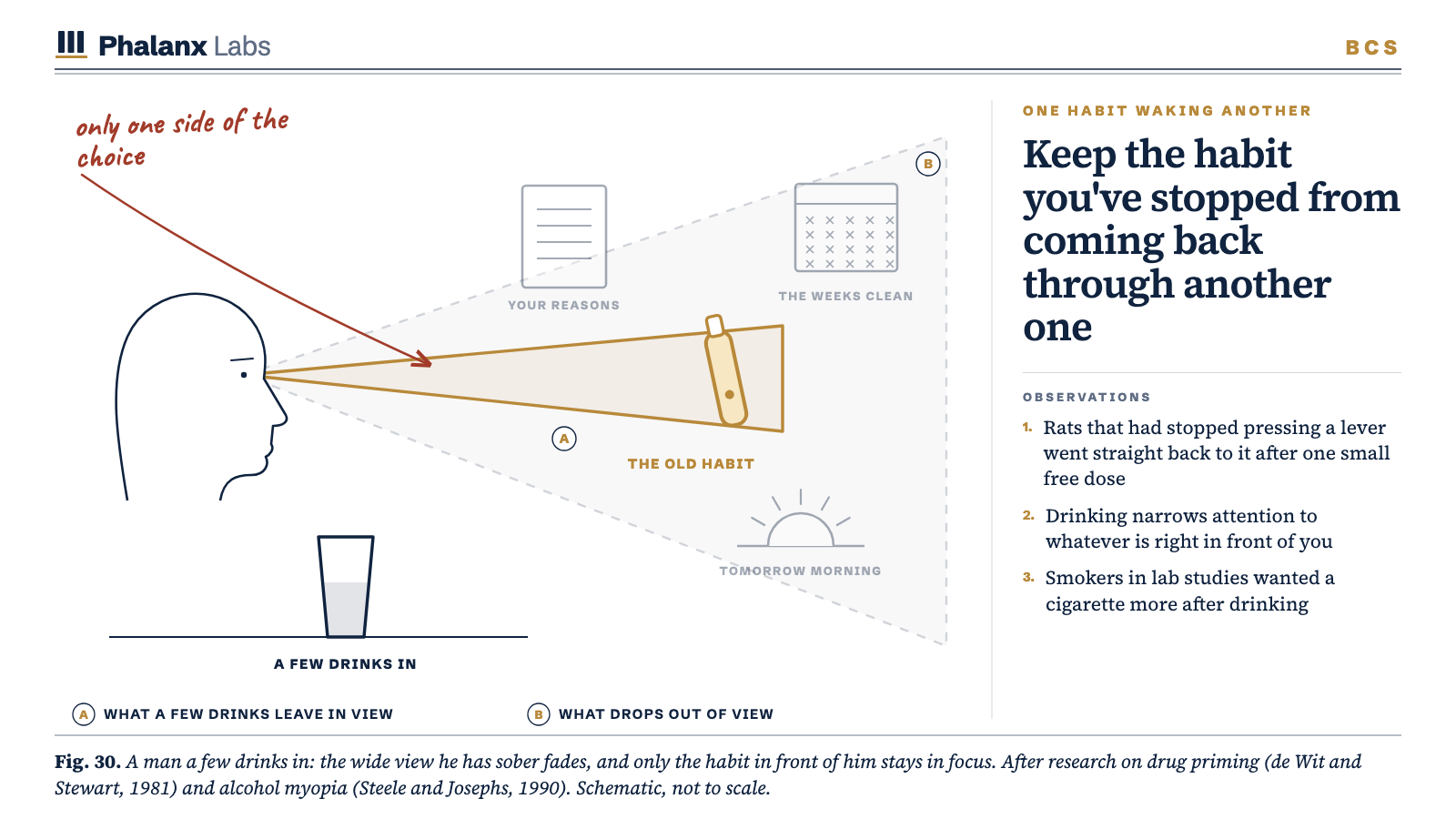
Keep the habit you've stopped from coming back through another one
You can go weeks without the habit you're trying to break, and then lose it all in one evening to a different habit you never thought was a problem.4 min readHow to talk yourself into change
People tend to believe what they hear themselves say, so the morning lecture can talk you out of change, and your own reasons, in your own words, can talk you into it.7 min read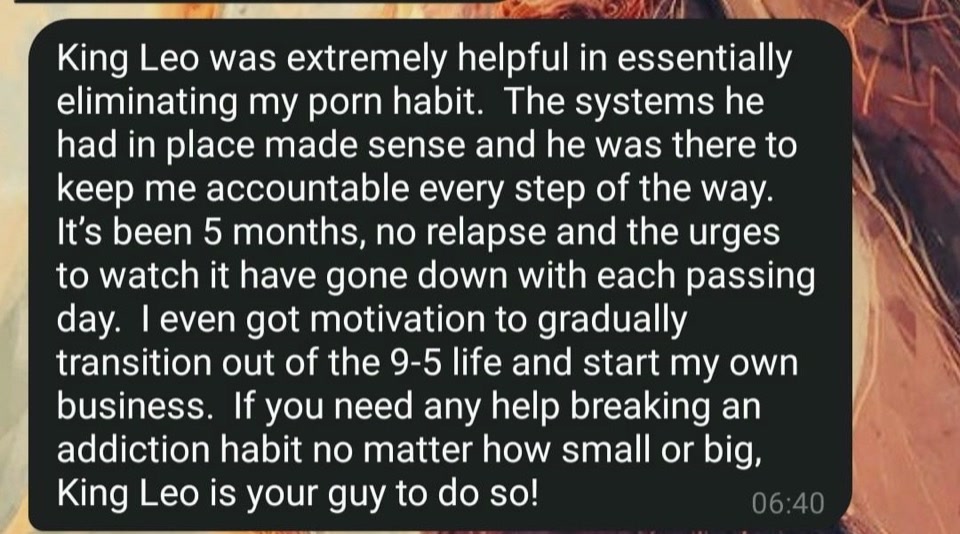
Five months, no relapse, and urges that faded
A client came to us with a porn habit, and five months later the urges had gone down with each passing day, which is the part most people don't believe.4 min read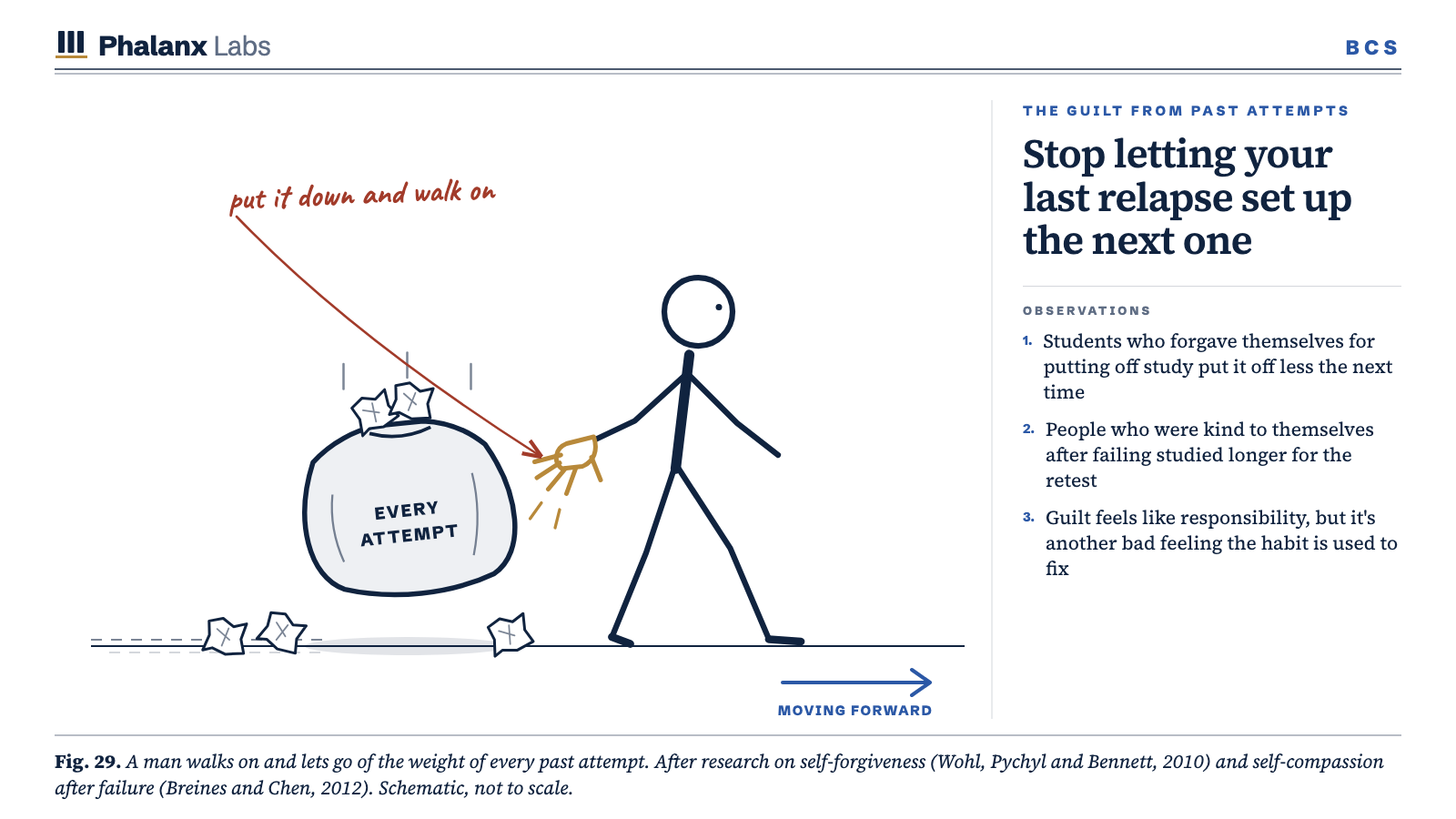
Stop letting your last relapse set up the next one
Most people think guilt is what keeps them in line after a relapse, but the research says it often does the opposite.3 min readHow to beat the “just this once” thought
“Just this once” doesn't feel like a craving, it feels like a sensible exception, and seeing tonight's choice as one in a series changes what you choose.9 min read
Ade and the voice in his own head
Ade spent years white-knuckling his way through attempts to drop several bad habits; what was wearing him down was the voice in his own head.4 min readHow to fill the empty evening
An evening with nothing in it is where a lot of relapses start, so you plan the empty hours with rewards you earn before they arrive.8 min read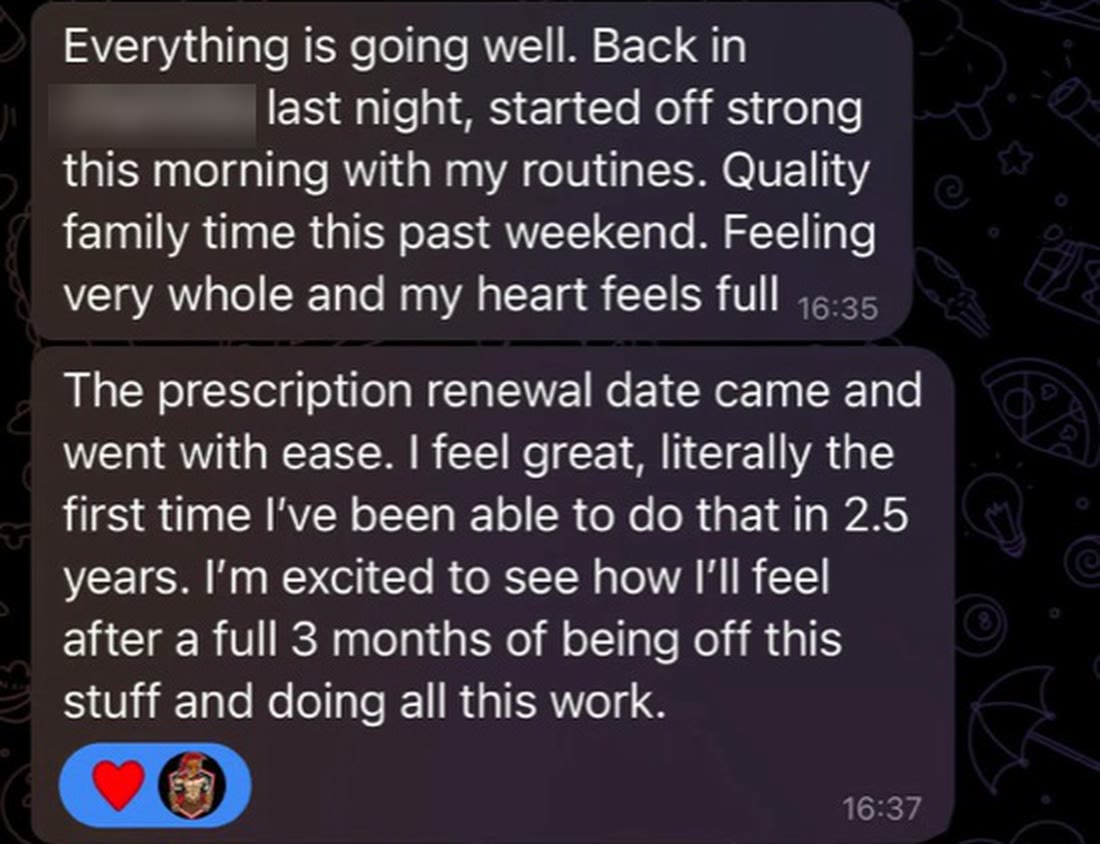
The prescription renewal date that came and went with ease
For two and a half years a client's prescription renewal date had never once passed easily; this time it came and went, because the plan was made long before it arrived.3 min read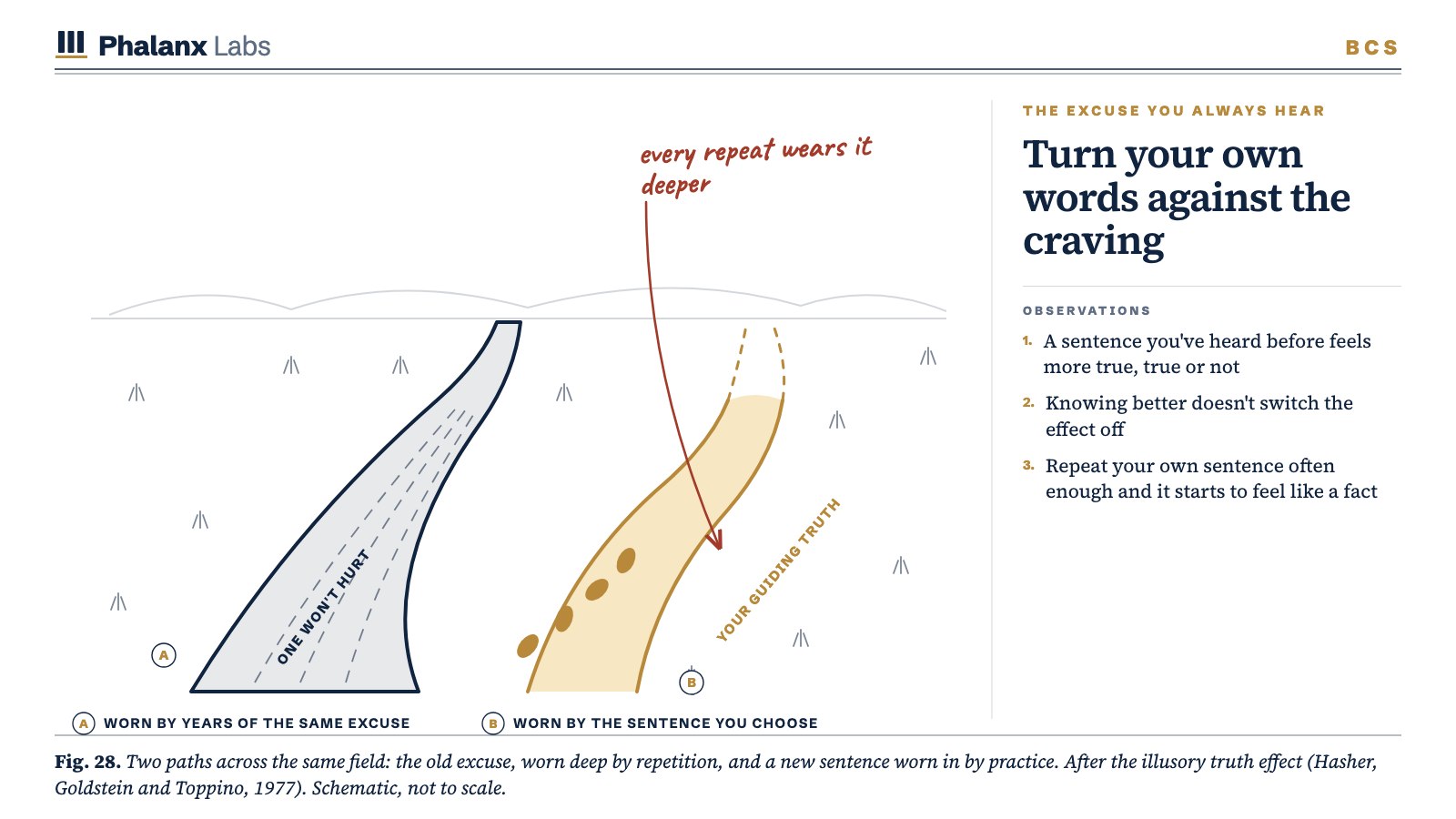
Turn your own words against the craving
The thought that gets you to relapse usually sounds like plain common sense, and it feels true because you've heard it so many times.4 min readHow to fix your sleep so the cravings drop
Poor sleep makes every craving louder, and the habit you use to get to sleep makes the sleep worse, so a fixed sleep routine comes before anything else.7 min read
Juan Carlos and why two clean weeks aren't enough
Juan Carlos was struggling with porn every day; he learned that one or two clean weeks aren't enough, and that the real work starts when the motivation fades.3 min readHow to plan for the moments you always give in
Most relapses happen in a handful of moments you already know, and a plan written as “if this happens, then I'll do that” decides what you'll do before the moment arrives.9 min read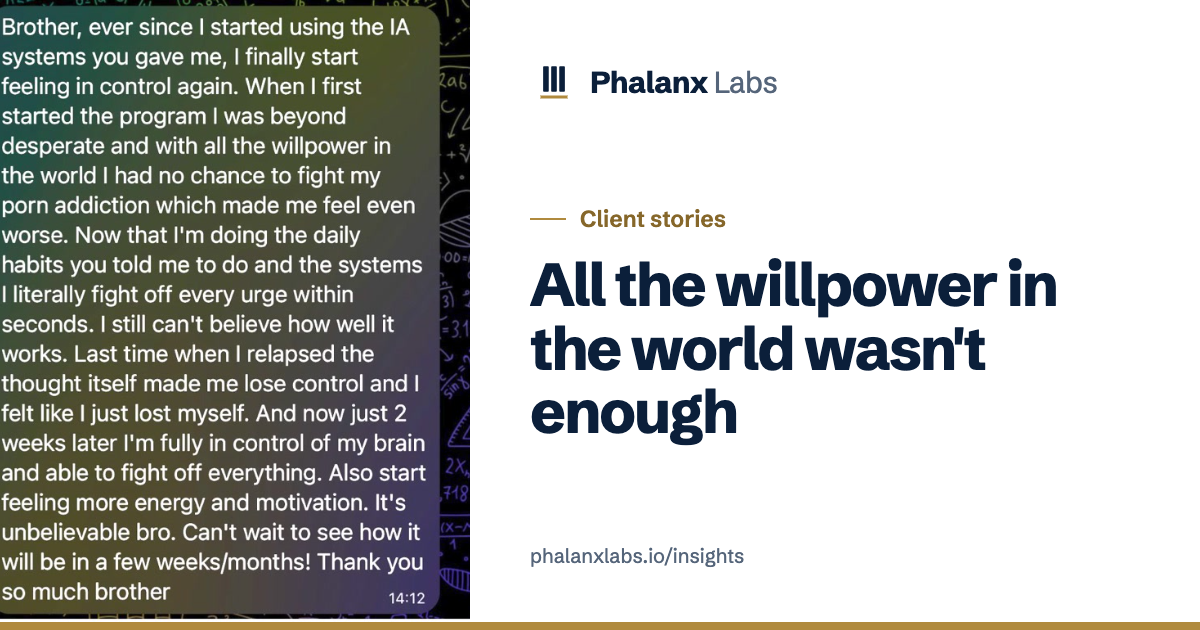
All the willpower in the world wasn't enough
A client was fighting porn with willpower and losing every time; two weeks after their last relapse, they were fighting off every urge within seconds.3 min read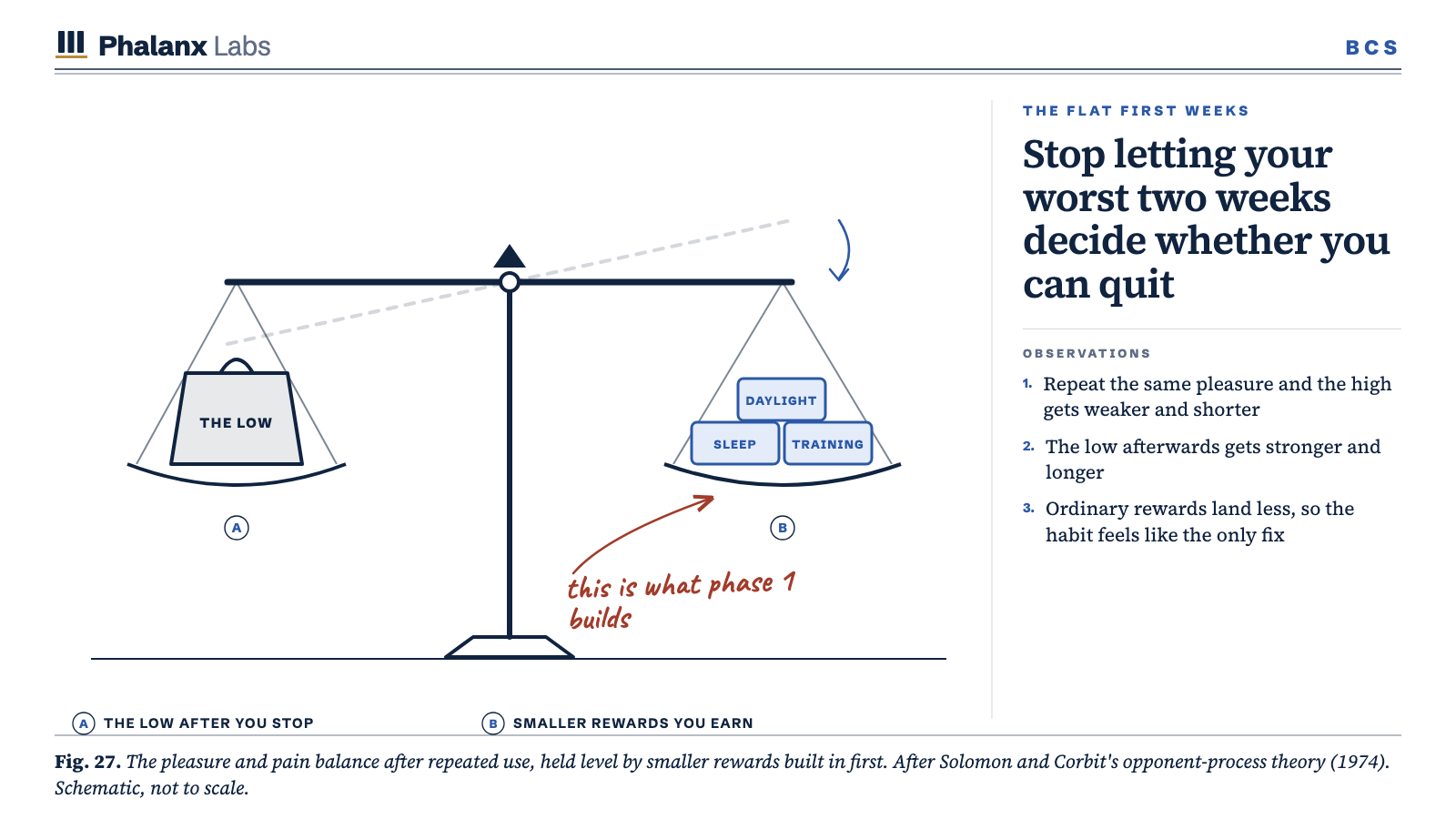
Stop letting your worst two weeks decide whether you can quit
The habit doesn't even feel that good anymore and you still can't stop, because your brain turns its own volume down to keep you level.4 min readHow to find out exactly why you relapsed
A relapse feels like it all happens at once, but it's a chain of links, and once you can see the links you can break the ones that matter.10 min read
Chris and the plan built for his real week
Chris had struggled with porn and social media for nine to ten years; he knew what to do, and what he needed was a plan that held up in a busy week.3 min readHow to stop one relapse turning into a binge
It's what you tell yourself after one relapse that decides whether it stays one night or becomes a week, so you write the plan for it before you need it.9 min read
Why a client shouts “thought distortion” out loud
A client kept being talked into relapses by their own thoughts; now they name each one out loud the second it shows up, and they haven't relapsed since.3 min read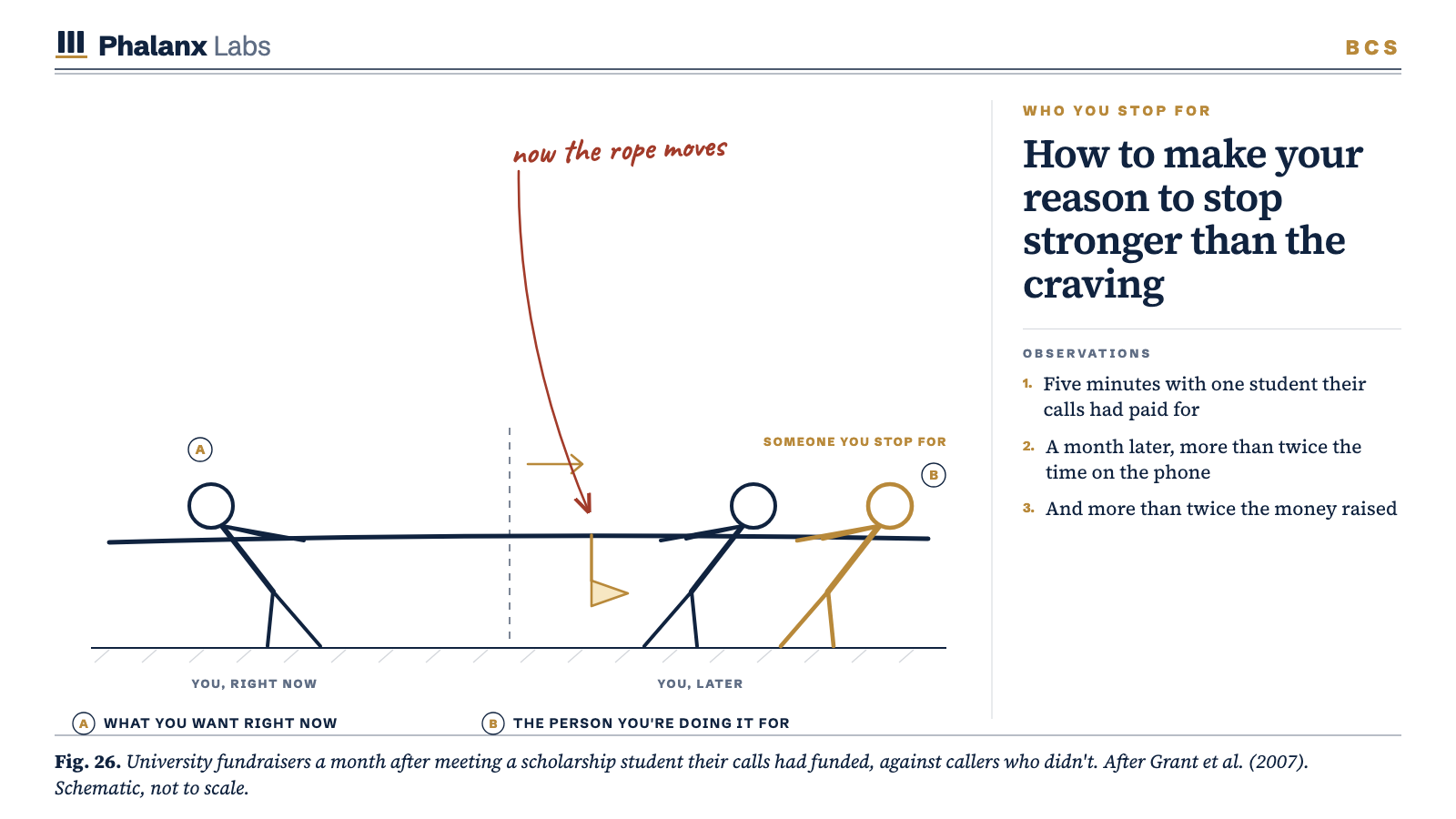
How to make your reason to stop stronger than the craving
Most people pick a reason to stop that's all about themselves, and that's exactly the reason that disappears when the craving shows up.4 min readHow to calm a craving in 60 seconds
When a craving is too strong to think straight, the fastest way through is to calm the body first, with cold water, slow breathing and tensing and letting go.8 min read
How Inge stopped white knuckling and stayed sober
Inge had tried to get sober before and it never lasted; this time she was 56 days in and had craved alcohol “maybe once or twice.”3 min readHow to stop giving in to cravings without saying no
Your brain judges a reward by how close it is, so “no” fights the habit at the moment it looks biggest, while “not yet” pushes it a little further away and lets the craving come down.9 min readWalk out of your head
Going over the same thoughts again and again is often what turns into a craving, and a study from Stanford looked at what turns that thinking down.3 min readHow to make any habit hard to reach
Giving in at 10pm isn't a weakness of will: it's what happens when you have to win the same argument with yourself every night, so the fix is to make the habit hard to reach before the craving shows up.8 min read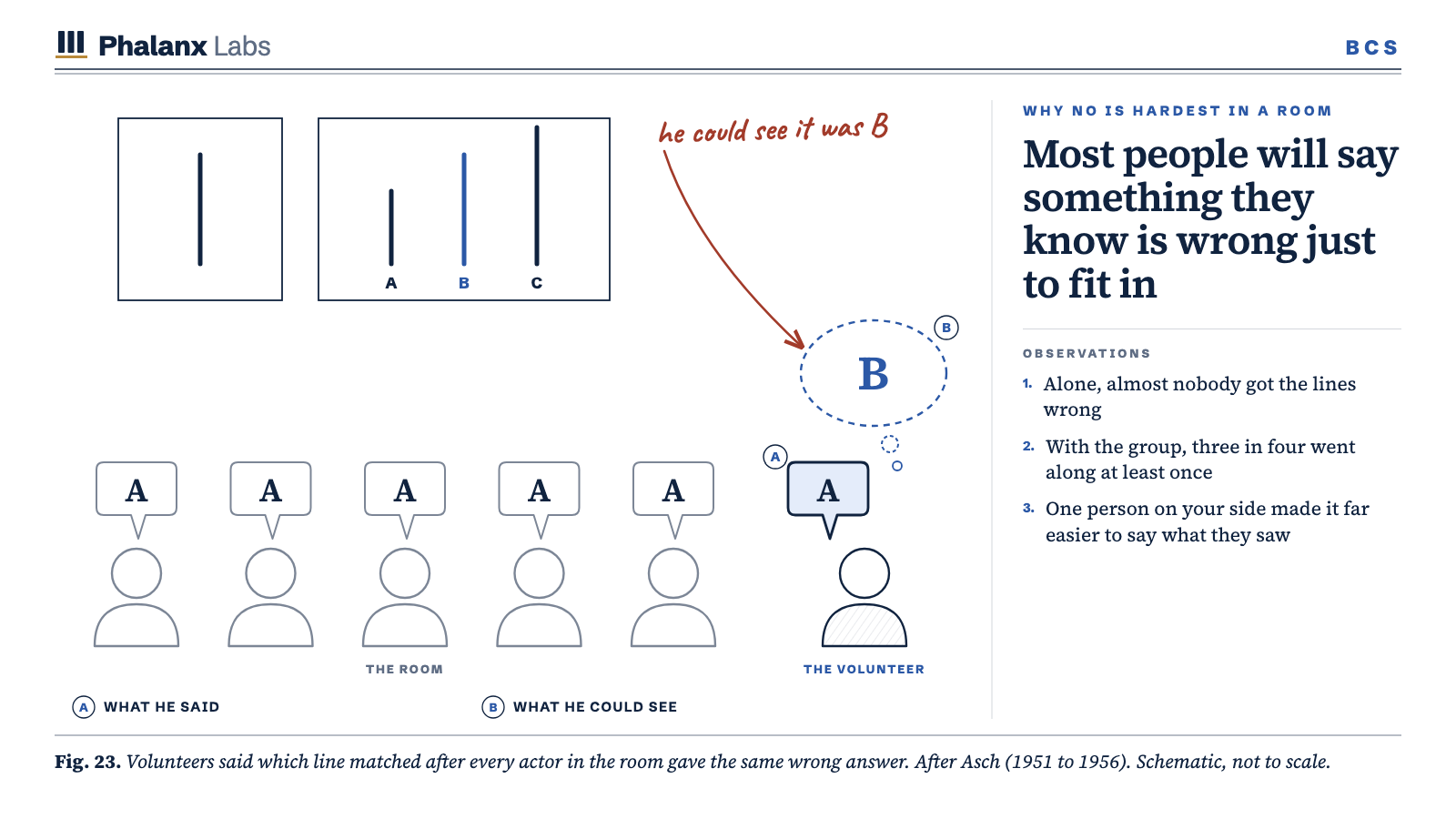
Most people will say something they know is wrong just to fit in
You can hold out for days on your own and give in ten minutes into a dinner with friends, and a classic conformity experiment shows why.3 min read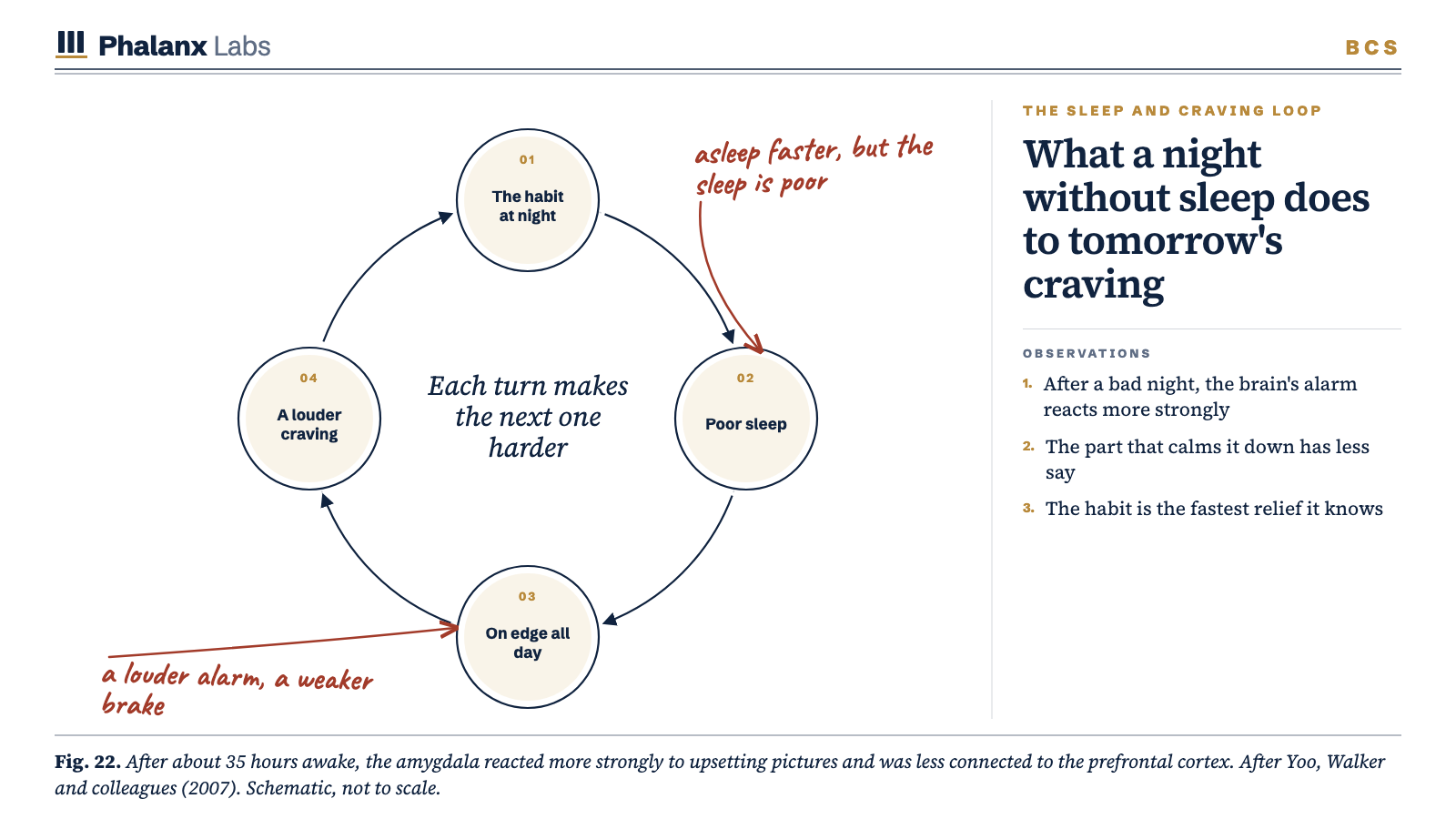
What a night without sleep does to tomorrow's craving
After a bad night, small things feel like threats and the craving gets louder by the evening, because sleep loss changes how the brain handles stress.4 min read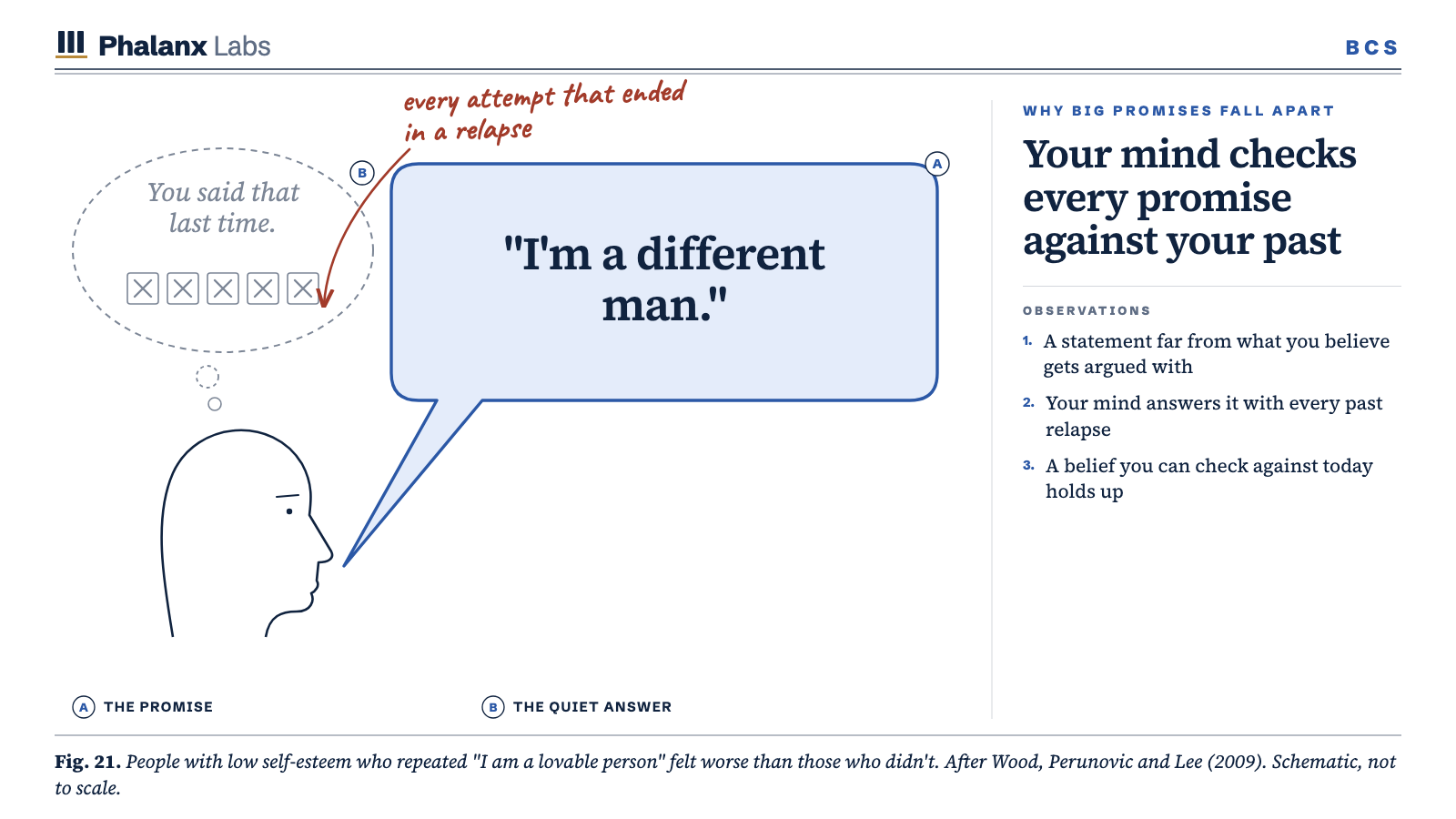
Your mind checks every promise against your past
The bigger the promise you make to yourself after a relapse, the faster it tends to fall apart, and research on positive self-talk shows why.4 min readHow one bad night turns into a relapse, and how to stop it
What decides the rest of the week is rarely the night you gave in. It's the story you tell yourself the next morning.5 min readWhy cravings get louder a few weeks after you stop
A craving that hits harder in week two, or a trigger that lands harder a month in, feels like proof you're going backwards. Behavior science has names for both, and both usually mean the opposite.6 min readHabits travel in groups. Stop treating them one at a time.
Weed and the phone, drinking and cocaine, porn and scrolling. Habits that share the same hours keep each other alive, so stopping one while keeping the others usually drags you back to all of them.6 min readPlan for the moment you usually lose, not the finish line
Picturing yourself free of the habit feels like motivation, but the research says it can work against you. What helps is knowing your triggers and rehearsing exactly what you'll do when they show up.6 min readWhy the habit starts to look harmless a few weeks in
Bad memories fade faster than good ones. A few weeks after you stop, the habit you remember is a little more pleasant than the habit you actually had, and that's when “maybe it wasn't that bad” starts to sound true.5 min readWhat to do in the first few minutes of a craving
A craving grows when your mind keeps building the picture, and a lot of it is felt in the body. Both give you places to step in that work better than arguing with it.7 min readStop describing yourself as someone who's trying to quit
Say “I'm trying to quit” for long enough and it becomes part of who you are, and in your own head, someone who's trying to quit is still someone who does it.5 min readThe empty hour: why boredom ends so many attempts to stop
A surprising number of relapses happen on days when nothing is wrong at all. An empty hour is harder on people than they realize, and the habit is the quickest thing the brain knows to fill it.6 min readWhy we rebuild your day before we touch the habit
Most attempts to stop go straight at the habit and leave the day around it untouched. We do it the other way round, because you can't beat a craving on a day that's built around it.5 min readWhy you can't find the moment you decided to relapse
A lot of relapses aren't decisions you lost. They're movements your hand has made so many times that it goes first, and the reason arrives afterwards.5 min readThe flat weeks: when stopping feels like it isn't working
A few weeks into stopping, nothing seems to change anymore. In the 1890s, two psychologists watching people learn Morse code found out what's really happening in stretches like that.5 min readEvery broken “never again” teaches you not to believe yourself
You judge yourself the way you judge anyone else: by what you do, not by what you say. Trust in your own word comes back from a record of small kept promises, never from a bigger promise.5 min readDopamine fires at the trigger, not the reward
Why can you go all day without thinking about the habit, then want it badly the second you sit in the car? Because your brain learned to respond to what comes before the reward.6 min readWhy “just don't think about it” makes cravings worse
To obey “don't think about it”, your brain has to keep checking whether you're thinking about it, and the check brings the thought back. By evening, the part doing the pushing is worn out.6 min readYour body starts the habit before you do
The places where a habit usually happens train your body to get ready for it. When you stop, the getting ready keeps going, and that restless, edgy feeling is a big part of what you call a craving.5 min readWhy one stressful day can undo three good weeks
Stress ends more attempts to stop than craving does. Under pressure, the brain hands control from the part that plans to the part that repeats, and the habit is what it knows best.5 min readWhy you can quit on holiday and relapse the first night home
Stopping a habit is learned in a place. The old habit is still fully loaded in the room where it lived, which is why a clean streak earned somewhere else proves less than it feels like.6 min readWhy you keep going back to something you don't even enjoy
Wanting and liking run on two different systems in the brain. Years of a habit like porn turn the wanting up and the liking down, and that gap is what keeps you opening the next tab.6 min readWhy relapse so often comes on your best days
A relapse is rarely one bad decision. It's several small, reasonable ones lining up on a day when you feel you've earned a rest.6 min readYour 7am promise is written for a stranger
The man who swears off the habit in the morning and the man who gives in at night share one brain in two different states, and only one of them gets to plan.6 min readWhen drinking stops being about the drink
Most drinking problems start with taking the edge off and end with drinking to get away from life itself. Stopping means dealing with what heavy drinking has changed, not just getting the alcohol out of your system.5 min readYour phone is a slot machine you carry in your pocket
Infinite scroll runs on the same reward schedule as a slot machine: you never know whether the next swipe will pay. That “maybe” is what keeps you scrolling for hours.5 min readNeuroplasticity doesn't care what you believe
A habit is learned the way a skill is learned: attraction, then repetition, then something that runs without you. You get out of it the same way you got in, by repeating something else until the wiring agrees.5 min readProcrastination isn't a time problem
Better schedules rarely fix chronic procrastination, because it's mostly about avoiding a bad feeling. Four things usually sit underneath it, and each one has a fix.5 min readEvery high is paid for with a low
The brain answers every spike in pleasure with a dip on the other side. Repeat the spike often enough and the dip becomes your normal, which is why ordinary life starts to feel flat.5 min read


Showing 12 of 72