How Long It Takes Your Brain to Recover After You Quit
How long does it take your brain to recover after you quit weed, nicotine, alcohol, cocaine, porn or your phone? The research doesn't give one number. It shows several clocks running at once: withdrawal that fades within weeks, a reaction to triggers that can grow for months after you stop, and slower changes in sleep and the brain itself that you can't feel.
Transcript
The narration, word for word. The client clips aren't included.
How long does it take your brain to recover after you stop? You've probably seen people give confident answers. Thirty days. Ninety days. Or a chart that tells you what's happening to you week by week.
The research gives a different answer, and it's a more useful one. Your brain doesn't recover on one clock. It recovers on several, and they run at very different speeds. Some parts come back sooner than most people fear. But one part of it, the way your brain reacts to triggers, can actually get stronger after you stop. It can keep getting stronger for months, right through the time when you feel like the hard part is over.
That matters, because most plans to stop are built for the first week or two, and the research says that isn't long enough. And most of the people we work with have tried before. Over seven years, we've worked with 290-plus clients, and 98.4% of them had already tried to stop and failed before they came to us.
Everything in this video comes from published studies, and you'll see the sources on screen. If researchers have measured a timeline for a habit, we'll give it to you. If we couldn't find one, we'll say so. There are four parts to this. First the fast clock, then the trigger clock, then two clocks you can't feel, and last, the habits nobody has timed at all. For each one, we'll cover what you can do about it.
Let's start with the fast clock, because it's mostly good news.
When you use something often, your brain changes to get used to it. When you stop, it has to change back. A lot of what you feel as withdrawal is your brain changing back. And for most habits, the research shows this takes weeks.
Take weed. THC works on spots in your brain called CB1 receptors. You can think of them as the places where the drug plugs in. When you smoke every day, your brain turns these receptors down. In brain scans, daily smokers had about 15 to 20% fewer of them than people who don't smoke. When people stopped, the receptors started coming back within two days. By about four weeks, they were back to normal in most of the brain.
Memory comes back in a similar way. In one study, heavy smokers spent a month off weed, and the researchers checked that they really stayed off. They took memory tests along the way. In the first week, they were worse than non-smokers at remembering lists of words. By day 28, there was almost no difference at all.
There's one exception, though. A study followed people from birth until they were 38. People who started smoking weed as teenagers, and kept smoking for years, lost some of their thinking ability. Stopping didn't fully bring it back.
Nicotine works the other way around. Smoking leaves your brain with more nicotine receptors than it would normally have. About a week after their last cigarette, smokers had 26 to 36% more of these receptors in the outer layer of the brain than people who'd never smoked. And the more receptors someone had, the stronger their urge to smoke. So in that first week, you're trying to stop while your brain has extra receptors waiting for nicotine. By six to twelve weeks, the number had dropped back to the same level as a non-smoker's. This is the clock most people know about. There's a slower one that catches people out, and we'll get to it, but there's a bit more to cover here first.
How you feel follows a similar timeline. With nicotine, most withdrawal symptoms are worst in the first week. That means things like feeling irritable, anxious or low, and sleeping badly. They're usually gone in two to four weeks. With weed, withdrawal is usually worst between days two and six, and it fades over two to three weeks. But sleep problems and irritability can last a month or more. With cocaine, low mood and craving are highest at the start, and they get steadily easier over the first month. With Adderall and other stimulants, the worst part usually lasts a week to ten days.
Alcohol is different, and this part is important. Alcohol calms the brain down. So when someone drinks heavily, their brain gets used to it by revving itself up. If the drinking stops suddenly, the brain is still revved up, and that can cause dangerous withdrawal. It can start within 6 to 24 hours of the last drink, and it can include seizures. So if you drink heavily every day, or you take benzodiazepines or other prescription drugs, talk to your doctor before you stop. If someone in withdrawal has a seizure, gets confused or starts seeing things, call emergency services.
Once you're off alcohol, your brain starts to recover early, the same as with the other habits. Researchers scanned the brains of people being treated for alcohol dependence. At the start, they had less grey matter than healthy people. After two weeks without drinking, some of it had already come back. And the low mood and anxiety people feel early in sobriety usually ease over three to six weeks.
So here's what to do with the fast clock. Expect the first few weeks to be the hardest, and plan for them before you stop. Get your sleep steady first. Then decide what you'll do with the hours the habit used to fill. These weeks are hard, but for most habits, they end.
And that's where a lot of people go wrong. They get through the first month, they feel better, and they decide the hard part is over. But there's a second clock, and on this one, your brain's reaction to triggers can get stronger after you stop instead of easing off.
Researchers call it the incubation of craving. Incubation just means something growing quietly, out of sight.
It was first shown clearly with cocaine, in rats. Every dose of cocaine the rats took came with a light and a sound. Then the cocaine was taken away. Later, when the light and the sound came back, the researchers watched how hard the rats tried to get cocaine. The rats that had gone one day without it tried the least. The rats that had gone 60 days tried the hardest.
Then researchers looked for the same thing in people. They studied 76 adults who had last used cocaine two days, one week, one month, six months or one year earlier. They showed them pictures of cocaine and measured the brain's electrical response. It's a signal of how strongly something you want grabs your attention. At two days and one week, the response was low. At one month and six months, it was high. At one year, it was low again.
Now look at what those same people said about their craving. The craving they reported went down steadily the whole time, from two days all the way to one year. So in the months when their brains reacted most strongly to cocaine, they said they wanted it less than they had at the start. Based on that, the researchers concluded that somewhere between one and six months may be when people are most at risk of a relapse set off by a trigger. And it may also be when they're least aware of it. One word of caution, though. This study compared different people at different points in time. So it shows a pattern across the group, but it doesn't track any one person over time.
The same pattern shows up with other habits. Researchers studied men being treated for alcohol dependence. Their triggers for alcohol set off more craving at 60 days than they did at seven days. That study stopped at 60 days, so we don't know when the craving starts to go down. In people who stopped using methamphetamine, craving set off by reminders of the drug kept rising until three months. By six months it had come down, and it was still down at one year. And researchers have seen craving grow the same way in people who smoke.
So there are two different things going on here. How much you want the habit from day to day goes down after you stop. But how strongly your brain reacts when a trigger shows up can go up, and it can keep going up for months. That means you can feel safe and be at your most at risk at the same time.
There's a reason you might not feel it coming. In one study, people in treatment for cocaine were shown pictures of cocaine for 33 milliseconds. That's too fast to see. But the parts of their brain that respond to reward still reacted. So what you feel isn't a reliable guide to how strongly your brain is reacting.
So what do you do with this? Plan for the second month and beyond, not just the first week. Make a list of your triggers, and get rid of every one you can. For each one you can't get rid of, decide ahead of time what you'll do when it shows up. Then practice that response every day, and keep practicing it after you start to feel safe. Keep a short record of each craving and how you handled it. That way you can see the pattern, even when you can't feel it. Every time a trigger comes and goes and you don't give in, the link between that trigger and the habit gets a little weaker.
If you've stopped before and then gone back sometime in the second or third month, this could be part of the reason. If you want help working out which triggers matter most for you, and what you'll do about each one, that's what a Root-Cause Diagnostic is for. It's a call with our team where we find the loop beneath your habits and work out exactly where your past attempts broke down. If we can't help, we'll tell you. You can apply at phalanxlabs.io/book.
So, back to the clocks. The trigger clock is easy to miss because it builds quietly. The next two are easy to get wrong too, because you can't feel them at all. The first one is sleep.
After you stop, sleep usually gets worse before it gets better. With weed, your dreams come back, and they're vivid and strange. It also gets harder to fall asleep and to stay asleep. For most people, that's worst in the first one to two weeks, and it settles within about a month. With alcohol, sleep is short and broken at first. After that, it keeps slowly getting better for months.
Cocaine is a good example of how wrong you can be about your own sleep. In one study, people who had used cocaine heavily stayed in a research unit where their sleep was measured. Their sleep was at its worst after 14 to 17 days without cocaine. That was exactly when they rated their own sleep as the best it had been.
And sleep matters here, because poor sleep weakens the part of your brain that handles self-control. We covered that in our first video. The research on weed shows it too. People who slept badly before they stopped were more likely to smoke again in the first two days. So go to sleep and wake up at the same times every day, get daylight in the morning, and keep your phone out of the bedroom. Start these before you stop, and keep them going through the weeks when you think you're sleeping fine.
The second clock you can't feel is the slow rebuilding of the brain itself.
The brain's reward system is the part that lets ordinary things feel good, and it recovers slowly. In people who had used cocaine heavily, one type of dopamine receptor was still lower than normal three to four months after they stopped.
That's part of why the first weeks often feel flat. Ordinary things don't feel like much, and boredom is hard to put up with. With cocaine, that flat feeling lifted within two to ten weeks in people who stayed off it. Feeling flat for a while is common, and it usually lifts. Feeling hopeless, or thinking about harming yourself, is different. If that happens, contact emergency services or a crisis line straight away.
The structure of the brain takes the longest to recover. One study looked at people who had stopped using cocaine. Those who had stayed off longer had more grey matter in the parts of the brain that support self-control. After about 35 weeks, it had caught up with people who had never used cocaine. And in people who had stayed off longer than that, it was higher on average. Like the earlier study, this one compared different people instead of following the same people over time. Still, there's one detail worth pointing out. The parts that grew weren't the same parts that had shrunk while people were using. So it looks like the brain is doing more than repairing the damage. It seems to be building something new too.
For alcohol, here's where the research actually stands. Recovery starts quickly and keeps going for months, but it's different from person to person, and from one part of the brain to another. Nobody can honestly promise that a part of your brain will be back to normal by a set day, because the research doesn't support a date.
That leaves the habits where we couldn't find a measured clock at all. That includes the one with the most confident timelines online.
If you're trying to stop watching porn, you've probably seen day-by-day charts of what happens after you stop. We looked for a study behind any of them, and we couldn't find one. Only one study has put people into groups at random to test what actually happens when they stop. It took 176 university students who watched porn at least three times a week, and asked them either to stop for a week or to carry on as usual. There was no difference in withdrawal symptoms between the two groups. That study has limits, though. Most of the students were women, few of them had serious problems, and a week is a short time. And one extra analysis did find that people whose use was both daily and a real problem for them craved more after stopping. What we do know is that there's no dangerous physical withdrawal from porn. What most people feel is a strong urge when they're back in their old situations. Those urges are often strongest in the first few weeks, and they can come back in old settings for months.
We couldn't find a measured clock for phones or gaming either. There's no good study of how long the urge to scroll lasts after you stop. And there's no reliable day-by-day timeline for gaming.
These habits don't run on a clock, because they're mostly things your brain has learned, and learning doesn't fade on a schedule. When you stop, the old learning isn't erased. Your brain lays new learning on top of it. And that new learning is tied to the place where it happened. That's why someone can go weeks without porn at home, then feel the urge as strongly as ever in a hotel room on a work trip.
There is one clock here we can measure. It's the clock for whatever replaces the habit. In a study of people building new daily habits, it took a median of 66 days for a new habit to become nearly as automatic as it was ever going to get. Median means half the people took less time and half took more. Some people took much longer. And missing a single day didn't undo their progress.
So don't wait for a date when the urge will be gone. Get rid of the triggers you can, plan a response for each one you can't, and build the new routine. The urge gets weaker every time it comes and passes without you giving in. And it gets weaker faster when you have something else to do in that moment.
So here's how the clocks fit together. Withdrawal and many of the receptors settle within weeks, and sleep starts getting better within weeks too. What your brain has learned about your triggers lasts much longer, and its reaction to them can grow for months. And the slowest things to change are two we haven't talked about yet. One is how you see yourself. It takes a long time before you think of yourself as someone who has stopped, and not as someone who still has the habit. The other is the people and places that go with the habit.
That means the order matters. Get your body and your sleep steady before you stop. Expect the first weeks to be rough, and know that they end. Do your most careful trigger work in the second and third months. That's when you'll feel better, and it's when your brain may be reacting the most. After that, work on how you see yourself and on the people and places tied to the habit, because those take the longest. And even then, keep your support going. The risk of going back is highest early on and falls over time, but it doesn't reach zero.
That's the order we use for the 90 days our clients spend with us. The body comes first, then the triggers, then how you see yourself, and after that there are six months of aftercare. Our success rate is 97%.
Here are some of our clients, in their own words, at different points after they stopped.
If you want to find the loop beneath your own habits, the next step is a Root-Cause Diagnostic with our team. Apply at phalanxlabs.io/book.
And if you've ever wondered why a trigger can hit so hard when the habit itself doesn't even feel that good anymore, that comes down to the difference between wanting and liking. That's the video to watch next.
Sources
- Parvaz MA, Moeller SJ, Goldstein RZ (2016). Incubation of cue-induced craving in adults addicted to cocaine measured by electroencephalography. JAMA Psychiatry 73(11).
- Hirvonen J et al. (2012). Reversible and regionally selective downregulation of brain cannabinoid CB1 receptors in chronic daily cannabis smokers. Molecular Psychiatry 17(6).
- D'Souza DC et al. (2016). Rapid changes in CB1 receptor availability in cannabis dependent males after abstinence from cannabis. Biological Psychiatry: Cognitive Neuroscience and Neuroimaging 1(1).
- Pope HG et al. (2001). Neuropsychological performance in long-term cannabis users. Archives of General Psychiatry 58(10).
- Meier MH et al. (2012). Persistent cannabis users show neuropsychological decline from childhood to midlife. PNAS 109(40).
- Staley JK et al. (2006). Human tobacco smokers in early abstinence have higher levels of beta2* nicotinic acetylcholine receptors than nonsmokers. Journal of Neuroscience 26(34).
- Cosgrove KP et al. (2009). Beta2-nicotinic acetylcholine receptor availability during acute and prolonged abstinence from tobacco smoking. Archives of General Psychiatry 66(6).
- Hughes JR (2007). Effects of abstinence from tobacco: valid symptoms and time course. Nicotine & Tobacco Research 9(3).
- Budney AJ et al. (2003). The time course and significance of cannabis withdrawal. Journal of Abnormal Psychology 112(3).
- Bonnet U, Preuss UW (2017). The cannabis withdrawal syndrome: current insights. Substance Abuse and Rehabilitation 8.
- Weddington WW et al. (1990). Changes in mood, craving, and sleep during short-term abstinence reported by male cocaine addicts. Archives of General Psychiatry 47(9).
- McGregor C et al. (2005). The nature, time course and severity of methamphetamine withdrawal. Addiction 100(9).
- Saitz R (1998). Introduction to alcohol withdrawal. Alcohol Health and Research World 22(1).
- Mirijello A et al. (2015). Identification and management of alcohol withdrawal syndrome. Drugs 75(4).
- van Eijk J et al. (2013). Rapid partial regeneration of brain volume during the first 14 days of abstinence from alcohol. Alcoholism: Clinical and Experimental Research 37(1).
- Heilig M et al. (2010). Acute withdrawal, protracted abstinence and negative affect in alcoholism: are they linked? Addiction Biology 15(2).
- Grimm JW et al. (2001). Incubation of cocaine craving after withdrawal. Nature 412(6843).
- Li P et al. (2015). Incubation of alcohol craving during abstinence in patients with alcohol dependence. Addiction Biology 20(3).
- Wang G et al. (2013). Effects of length of abstinence on decision-making and craving in methamphetamine abusers. PLoS ONE 8(7).
- Childress AR et al. (2008). Prelude to passion: limbic activation by "unseen" drug and sexual cues. PLoS ONE 3(1).
- Gates P et al. (2016). Cannabis withdrawal and sleep: a systematic review of human studies. Substance Abuse 37(1).
- Drummond SPA et al. (1998). The sleep of abstinent pure primary alcoholic patients: natural course and relationship to relapse. Alcoholism: Clinical and Experimental Research 22(8).
- Morgan PT et al. (2006). Sleep, sleep-dependent procedural learning and vigilance in chronic cocaine users: evidence for occult insomnia. Drug and Alcohol Dependence 82(3).
- Babson KA et al. (2013). Poor sleep quality as a risk factor for lapse following a cannabis quit attempt. Journal of Substance Abuse Treatment 44(4).
- Volkow ND et al. (1993). Decreased dopamine D2 receptor availability is associated with reduced frontal metabolism in cocaine abusers. Synapse 14(2).
- Gawin FH, Kleber HD (1988). Evolving conceptualizations of cocaine dependence. Yale Journal of Biology and Medicine 61(2).
- Connolly CG et al. (2013). Dissociated grey matter changes with prolonged addiction and extended abstinence in cocaine users. PLoS ONE 8(3).
- Fernandez DP et al. (2023). Effects of a 7-day pornography abstinence period on withdrawal-related symptoms in regular pornography users: a randomized controlled study. Archives of Sexual Behavior 52(4).
- Kaptsis D et al. (2016). Withdrawal symptoms in internet gaming disorder: a systematic review. Clinical Psychology Review 43.
- Bouton ME (2002). Context, ambiguity, and unlearning: sources of relapse after behavioral extinction. Biological Psychiatry 52(10).
- Lally P et al. (2010). How are habits formed: modelling habit formation in the real world. European Journal of Social Psychology 40(6).
- Kirshenbaum AP, Olsen DM, Bickel WK (2009). A quantitative review of the ubiquitous relapse curve. Journal of Substance Abuse Treatment 36(1).
Our success rate means significant behavior change by Day 90 and no relapse through six months of aftercare. These are our own client outcomes, not a clinical trial. Individual results vary.
The client clips are individual clients' experiences, shared with their permission. They are not typical or guaranteed results.
Phalanx Labs is a behavior and performance engineering firm. What we do is not therapy, medical treatment or a crisis service.
More videos
 11:39
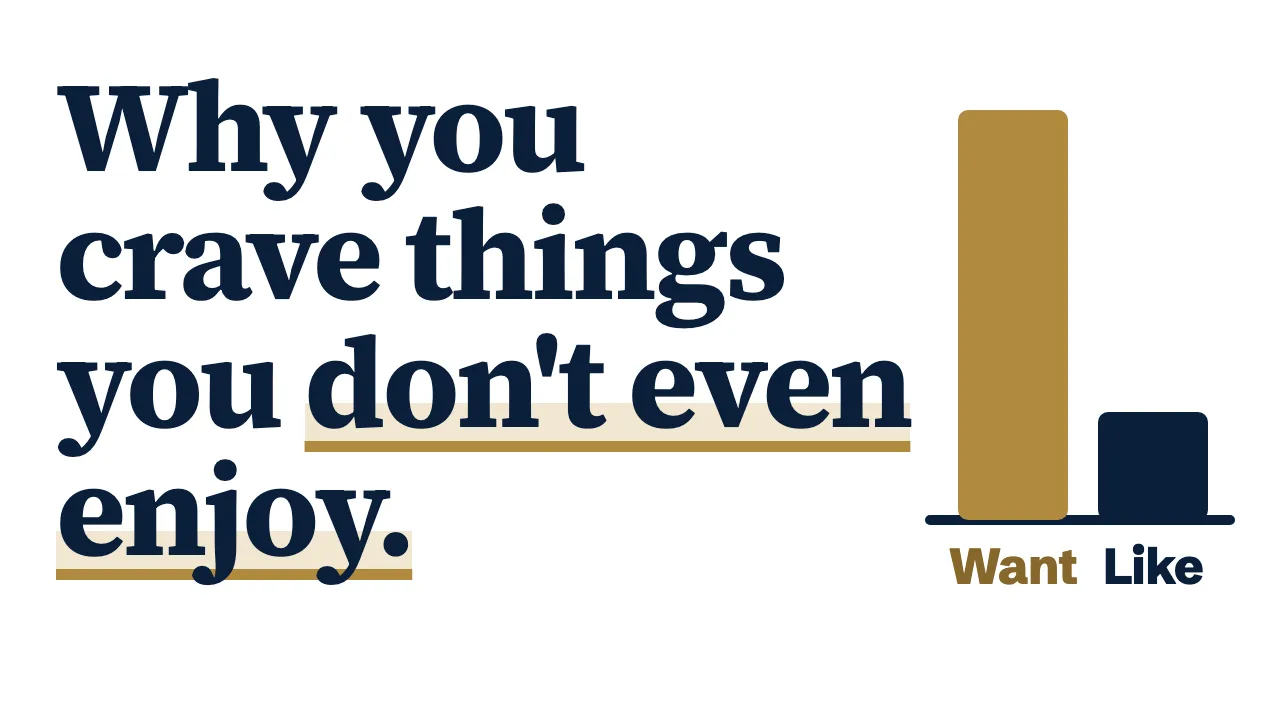
Why You Crave Things You Don't Even Enjoy
You can crave something badly, get it, and feel almost nothing, whether it's a drink, a cigarette, porn or your phone. This video explains why: wanting and liking run on two separate systems in the brain, and a habit can make the wanting stronger while the liking stays the same or drops.
Watch 11:28
Why Disciplined People Can't Break Their Habits
You can be disciplined at work and still go back to a habit you've decided to stop, whether it's porn, alcohol, nicotine or your phone. This video explains why that happens, using published research on stress, triggers, sleep and relapse.
Watch