Why Disciplined People Can't Break Their Habits
You can be disciplined at work and still go back to a habit you've decided to stop, whether it's porn, alcohol, nicotine or your phone. This video explains why that happens, using published research on stress, triggers, sleep and relapse.
Transcript
The narration, word for word. The client clips aren't included.
You can hold a hard line in a negotiation, and when you tell people at work you'll do something, they know it'll get done. But in private, you keep going back to the same habits you've already decided to stop. This video is about what happens between the moment you decide to stop and the moment you go back.
If you've tried to stop before and it didn't last, that's the normal story. Of the 290-plus clients we've worked with, 98.4% had already tried and failed before they came to us. And almost every failed attempt gets explained the same way: I didn't have enough willpower, or there's something wrong with me.
We think that explanation is wrong, and we can show you exactly where. You have plenty of discipline. You're just using it in a place where it doesn't have much power.
We've spent seven years working on this one question, with clients in 12 countries. Everything in this video comes from published research, and you'll see the sources on screen. There are five things working against you, and we'll go through what you can do about each one.
Let's start with work. When you hold a hard line at work, you're not doing it alone. There's a deadline, there are other people in the room, and you can see what will happen if you don't deliver. All of that helps you control yourself, and none of it is coming from you. A lot of the control you have at work comes from what's around you.
Now think about where your habits happen. Usually there's no deadline, nobody else is involved, and the consequences don't show up until much later. So you're the same person, with the same discipline, but you have none of the help you're used to.
And there's another problem. There's a part of your brain that handles deliberate control, the bit where you stop and choose what to do. It's called the prefrontal cortex. It sits just behind your forehead. It's also the part of the brain that's most sensitive to stress. Even mild stress can quickly stop it working well, if that stress feels out of your control. Being tired can do the same, and so can poor sleep. So the part you rely on at work is the part that breaks down most easily, and it breaks down in exactly the conditions where your habits show up.
Think of a skilled driver after a long day, on a road with no lines, no signs and no other cars. The driver still has the skill. But there's nothing on that road to help them use it.
So here's what to do with this. Your best plan is to face the moment of temptation less often, so you don't have to win it so many times. That means fewer triggers, more distance between you and the habit, and a response you've already decided on for the moments you can't avoid.
That explains why some moments are harder than others. But it doesn't explain why a decision you really meant can stop working. That's the next part, and most people have never heard about it.
Your brain has two ways of choosing what to do. The first is called goal-directed. It looks at what you want and picks the action that gets you there. That's the system you use at work, and it's the one that makes the decision to stop.
The second is habit. It doesn't check your goals at all. It runs a response you've practiced many times, and the setting you're in is enough to start it. So if you're in the place where you usually do it, feeling the way you usually feel, the response just starts.
In 2009, two researchers ran an experiment that showed what stress does to these two systems. They taught people to do something to earn a food reward. Some of them were put under stress first. Then everyone ate that food until they were full, so the reward wasn't worth anything to them anymore. The people who hadn't been stressed adjusted. They stopped working for food they didn't want. The stressed people kept going. Stress had switched them from the system that checks the goal to the system that just runs the habit.
Researchers have seen the same shift toward habit in people with a drinking problem. Compared with other people, they relied more on habit and less on the brain areas that handle goal-directed control.
So your decision to stop is real. But it's made by one system, and the habit is run by another. And the habit system doesn't check what the other one decided.
There's a related problem, and it has a name. It's called the hot-cold empathy gap. "Cold" means calm. "Hot" means in the middle of a craving. When you're calm, you keep underestimating how much a craving will change what you want and what you do. So when you make a plan while you're calm, you're writing it for someone who won't be there when the craving hits.
So the fix is to make your decision in advance, and to tie it to the trigger itself. Researchers call these if-then plans: if this happens, then I'll do that. Across many studies, they had a medium-to-large effect on whether people reached their goals. Part of the reason is that the planned response starts on its own when the trigger shows up. If you leave the choice until the moment comes, you'll be making it when you're at your weakest.
But an if-then plan only covers the triggers you know about, and most people can only name one. To find the rest, it helps to know how a trigger gets made in the first place.
Your brain uses a chemical called dopamine. Most people think of it as the pleasure chemical. A better way to think of it is as a teaching signal. It tracks the difference between the reward you got and the reward you expected. And with practice, something odd happens. The dopamine response starts to happen earlier. It moves away from the reward itself and toward the first reliable sign that the reward is on its way.
That's how a place, a time, a mood or a person turns into a trigger.
There's something else going on too. In the brain, wanting something and liking it run on separate systems. Repeating a habit can make you want it more without making you like it any more. And the wanting is strongest when a trigger sets it off. So the temptation shows up at full strength, but the payoff is smaller and shorter than the temptation made it seem.
One study shows this clearly. It looked at men seeking treatment for problem porn use. In the study, a symbol came up first to tell them a picture was coming. When they saw the erotic pictures themselves, they reacted the same way other men did. The difference showed up at that symbol. Their reward system reacted more strongly to that signal. So they wanted it more, but they didn't like it any more than anyone else did.
When you stop, none of this learning gets erased. Your brain lays new learning on top of the old. And the new learning depends more on your setting than the old learning does. So when you go back to the place, the mood or the people where the habit was learned, the old response can come back.
That's where people give in. In a study of people who had stopped smoking, the first time they smoked again was more likely to come when they were in a bad mood, when cigarettes were easy to get, where smoking was allowed and when other smokers were around. And they were far more likely to have used a coping strategy in the moments they resisted than in the moments they gave in. So giving in usually happens where the trigger, your state and easy access all come together, and you don't have a response ready.
Most people say their trigger is stress. When our clients look closely, it usually turns out to be a lot narrower than that. It's stress on one day of the week, at one hour, in one room, after one kind of conversation.
So here's what to do. Write your triggers down in four groups: how you feel, situations and times, people and places, and objects. Then start by getting rid of every trigger you can. If the thing that sets it all off isn't in your house, it can't get started there.
The hard part is that two people with the same habit rarely have the same loop underneath it, meaning the chain of steps that keeps it going. And if an attempt goes after the wrong part of that loop, it fails, even when you carry it out well. That's what a Root-Cause Diagnostic is for. It's a call with our team where we find the loop beneath your habits, and exactly where your past attempts broke down. If we can't help, we'll tell you. You can apply at phalanxlabs.io/book.
Now, there's a reason the same trigger wins on some days and loses on others. And it starts the night before.
After one night without sleep, brain scans show fewer available dopamine receptors in the brain's reward area. Those receptors are what pick up the dopamine signal. In another study, a night without sleep made the brain's alarm center, the amygdala, react much more strongly to upsetting images. It also weakened the amygdala's link to the prefrontal cortex, the part that handles deliberate control.
Put those together, and a night without sleep leaves you with three problems the next day. Ordinary rewards feel flatter, stress hits you harder, and the part of you that keeps both in check isn't working as well. The habit offers fast relief from all three.
Stress is also the main way back into the habit. In a study of people leaving inpatient treatment for cocaine, researchers measured cravings in two ways. One was the craving people felt in response to drug-related pictures. The other was the craving they felt in response to a stressful story from their own life. Only the stress craving predicted how soon people relapsed over the next 90 days. For our clients, stress is usually the main way back in too.
Over time, you're no longer doing the habit to feel good. Each round leaves you feeling lower afterward, and that low gets deeper each time. So you end up using the habit more and more just to get back to normal. In other words, you're using the habit to get out of a low that the habit keeps making worse.
So steady your body first, before you set a date to stop. In our method, that means going to sleep and waking up at regular times, getting daylight in the morning, dimming the lights before bed, and keeping your phone out of the bedroom. When your body is steadier, the habit has less to offer you.
One important note here. Stopping some substances suddenly can be medically dangerous. If you drink heavily every day, or you take benzodiazepines or other prescription drugs, talk to your doctor before you stop.
There's one more piece, and it's the one that can turn a single bad day into another year of trying.
Most habits run as a loop with five stages. First there's a feeling or mood. Then the craving. Then the ritual, which is the steps you go through on the way to it. Then the act. And then the guilt. That last stage matters more than you'd think, because the guilt after the act can become the trigger for the next round.
How you explain giving in once makes a big difference. Researchers followed people who had stopped smoking and then had a cigarette again. The ones who went on to fully relapse were more likely to blame something about themselves. They saw it as permanent, as something that affected everything, like a lasting personal weakness. This is called the abstinence violation effect.
And before you give in at all, watch for the thoughts that talk you into it. They usually sound like reasonable exceptions. Today was hard enough that I've earned it. One won't matter. I can restart the plan tomorrow. They sound reasonable because you're thinking them in the hot state, in the middle of a craving.
So decide now how you'll treat it if you give in once. Treat it as an event to look at: what happened, when, where, and what came just before it. Then change your plan that same week. If you take giving in as proof of who you are, there's nothing to fix, so you stay stuck. But if you take it as something that happened, you can work out what to change.
Here are some of our clients, in their own words.
So let's put it all together. You had the discipline all along. You were using it in a place with no outside help, against a system in your brain that responds to your setting more than to your decision. And you can change every part of that in advance: your setting, your triggers, the state of your body, and the way you explain it to yourself when you give in.
That's the work our clients do with us over 90 days, and our success rate is 97%.
If you want to find the loop beneath your own habits, the next step is a Root-Cause Diagnostic with our team. Apply at phalanxlabs.io/book.
And if you've ever wondered why a craving can feel so strong when the payoff is so small, that's wanting and liking, and it's what we'll look at closely next.
Sources
- Arnsten AFT (2009). Stress signalling pathways that impair prefrontal cortex structure and function. Nature Reviews Neuroscience 10(6).
- Schwabe L, Wolf OT (2009). Stress prompts habit behavior in humans. Journal of Neuroscience 29(22).
- Sjoerds Z et al. (2013). Behavioral and neuroimaging evidence for overreliance on habit learning in alcohol-dependent patients. Translational Psychiatry 3(12).
- Loewenstein G (2005). Hot-cold empathy gaps and medical decision making. Health Psychology 24(4 Suppl).
- Gollwitzer PM, Sheeran P (2006). Implementation intentions and goal achievement: a meta-analysis. Advances in Experimental Social Psychology 38.
- Schultz W, Dayan P, Montague PR (1997). A neural substrate of prediction and reward. Science 275.
- Berridge KC, Robinson TE (2016). Liking, wanting, and the incentive-sensitization theory of addiction. American Psychologist 71(8).
- Gola M et al. (2017). Can pornography be addictive? An fMRI study of men seeking treatment for problematic pornography use. Neuropsychopharmacology 42(10).
- Bouton ME (2002). Context, ambiguity, and unlearning: sources of relapse after behavioral extinction. Biological Psychiatry 52(10).
- Shiffman S et al. (1996). First lapses to smoking: within-subjects analysis of real-time reports. Journal of Consulting and Clinical Psychology 64(2).
- Volkow ND et al. (2012). Evidence that sleep deprivation downregulates dopamine D2R in ventral striatum in the human brain. Journal of Neuroscience 32(19).
- Yoo SS et al. (2007). The human emotional brain without sleep: a prefrontal amygdala disconnect. Current Biology 17(20).
- Sinha R et al. (2006). Stress-induced cocaine craving and hypothalamic-pituitary-adrenal responses are predictive of cocaine relapse outcomes. Archives of General Psychiatry 63(3).
- Koob GF, Le Moal M (2001). Drug addiction, dysregulation of reward, and allostasis. Neuropsychopharmacology 24(2).
- Volkow ND, Koob GF, McLellan AT (2016). Neurobiologic advances from the brain disease model of addiction. New England Journal of Medicine 374(4).
- Curry S, Marlatt GA, Gordon JR (1987). Abstinence violation effect: validation of an attributional construct with smoking cessation. Journal of Consulting and Clinical Psychology 55(2).
Our success rate means significant behavior change by Day 90 and no relapse through six months of aftercare. These are our own client outcomes, not a clinical trial. Individual results vary.
The client clips are individual clients' experiences, shared with their permission. They are not typical or guaranteed results.
Phalanx Labs is a behavior and performance engineering firm. What we do is not therapy, medical treatment or a crisis service.
More videos
 14:33
How Long It Takes Your Brain to Recover After You Quit
How long does it take your brain to recover after you quit weed, nicotine, alcohol, cocaine, porn or your phone? The research doesn't give one number. It shows several clocks running at once: withdrawal that fades within weeks, a reaction to triggers that can grow for months after you stop, and slower changes in sleep and the brain itself that you can't feel.
Watch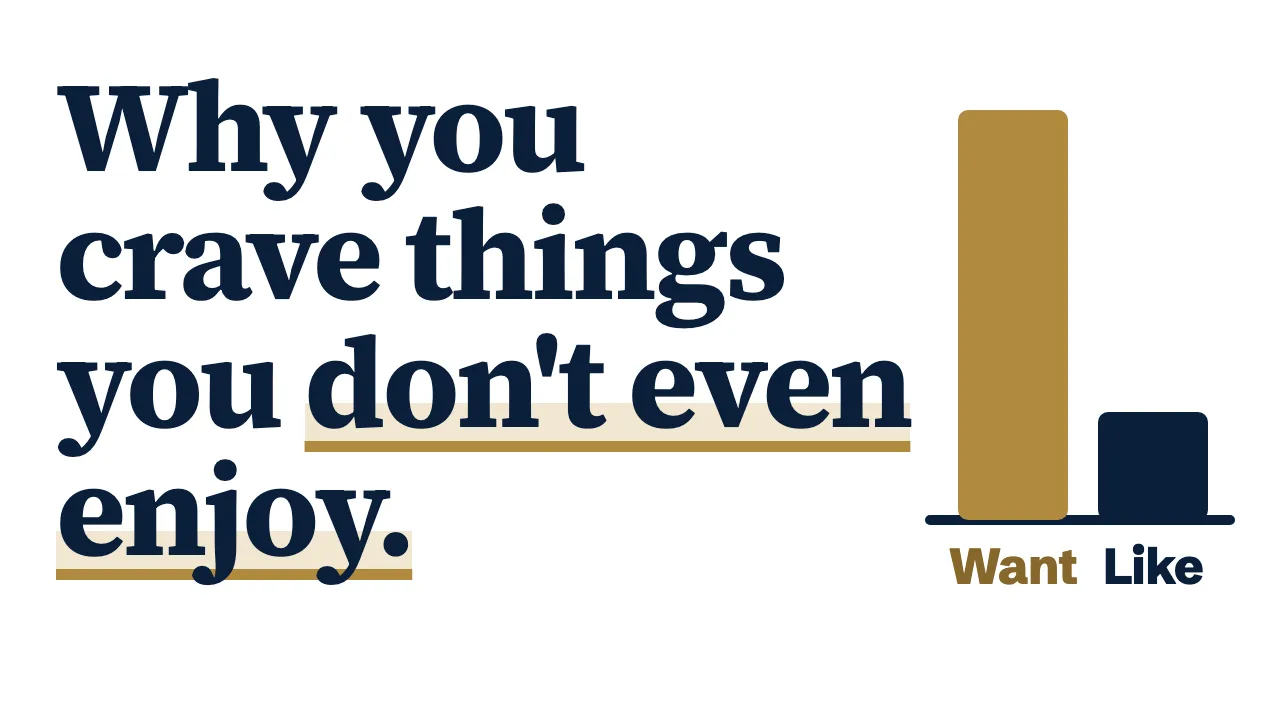 11:39
Why You Crave Things You Don't Even Enjoy
You can crave something badly, get it, and feel almost nothing, whether it's a drink, a cigarette, porn or your phone. This video explains why: wanting and liking run on two separate systems in the brain, and a habit can make the wanting stronger while the liking stays the same or drops.
Watch